
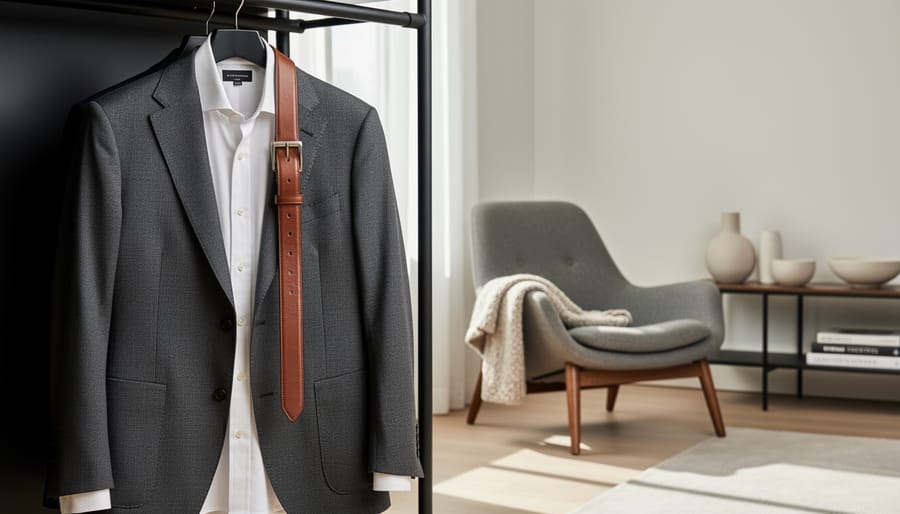
Styling your clothes well is about building a unified visual language that expresses who you are, both in what you wear and where you live. The method is simple: identify your core aesthetic through a style DNA framework, then apply consistent design principles across wardrobe and space to create a cohesive personal brand that feels authentic rather than forced.
Most men approach fashion and interiors as separate decisions, ending up with a closet full of trends that clash with their living environment. You see it everywhere: minimalist apartments filled with maximalist streetwear, or mid-century modern furniture paired with preppy Oxford shirts that belong in a different decade. The disconnect creates visual noise that undermines confidence instead of building it.
The connection between your clothes and your space isn’t superficial. Both serve as expressions of taste, priority, and identity. When they align, you project consistency. When they don’t, you send mixed signals that dilute your presence. Think of a man who wears sharp tailored suits to work but lives in a college dorm aesthetic at 35. The mismatch raises questions about self-awareness.
This guide walks you through a repeatable process to identify your authentic style markers, avoid common pitfalls that create dissonance, and implement a step-by-step system for harmonizing your wardrobe with your environment. You’ll learn verification techniques to confirm your choices work together, plus concrete examples across five major style archetypes. By the end, you’ll have a framework that turns getting dressed and designing your space from guesswork into intentional decisions that reinforce each other.
Understanding Your Personal Style DNA
Your personal style isn’t random. The clothes you reach for most often reveal a consistent set of preferences that form your aesthetic fingerprint. These same preferences can guide every design decision in your home, creating a seamless visual language across your entire life.
Start with a wardrobe audit. Pull out the five pieces you wear most frequently and lay them out together. What do you notice? Maybe they’re all in earth tones, or perhaps you gravitate toward navy and grey. Look beyond color to the textures: are you drawn to structured cotton oxfords or soft jersey tees? Do your favorite items share clean lines and minimal detailing, or do they feature more visual interest through patterns and hardware?
Pay attention to silhouettes, too. A man who prefers relaxed-fit chinos and oversized sweaters has a different aesthetic DNA than one who chooses tailored trousers and fitted knitwear. These preferences aren’t just about clothing fit, they signal your comfort with structure versus ease, formality versus casualness.
Now translate these observations into interior design language. Those earth tones from your wardrobe become warm wood furniture, terracotta accents, and olive textiles in your living room. Your preference for soft jersey translates to plush upholstery and cozy throws. The clean lines you favor in clothing suggest modern furniture with minimal ornamentation.
Create a simple chart with three columns: Wardrobe Preference, Design Equivalent, and Home Application. For example, if you consistently choose black leather boots, note “smooth leather in dark tones” under Wardrobe Preference, “leather upholstery or accessories” under Design Equivalent, and “black leather dining chairs or desk chair” under Home Application.
This exercise isn’t about copying your closet, it’s about recognizing the underlying preferences that make you feel most like yourself, then honoring those across all your spaces.
Essential Tools and Materials You’ll Need
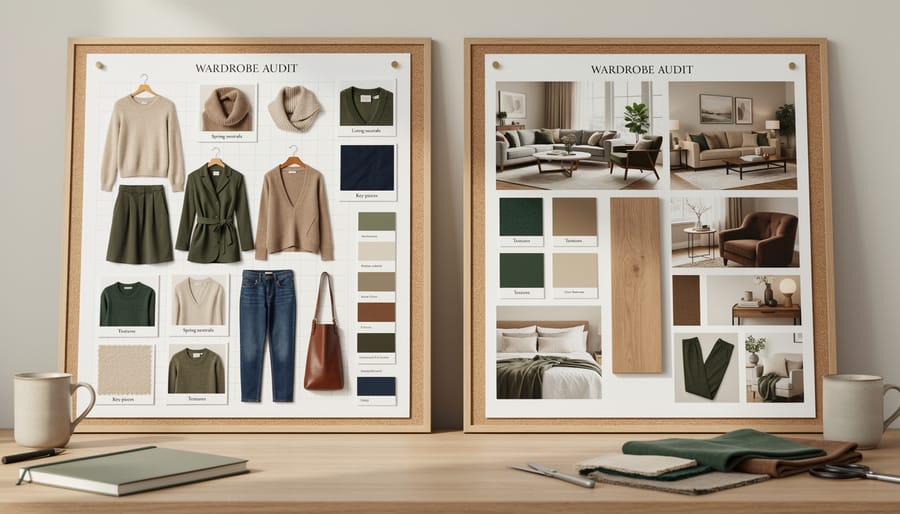
Before you bridge your wardrobe and living space, gather the right equipment. These tools help you capture your aesthetic preferences, translate them accurately, and execute your vision with precision. You don’t need everything at once, but having these essentials streamlines the process and prevents costly mismatches.
Start by building your reference library. Digital platforms like Pinterest, Instagram, and apps such as Houzz or Canva let you collect style inspiration from both fashion and interior design worlds in one place. Create separate boards for wardrobe favorites and room aesthetics you admire, then look for overlapping themes. Supplement these with a physical mood board, cork board or poster paper works, where you can pin fabric swatches, paint chips, magazine cutouts, and photos of your best outfits. The tactile element reveals connections that screens sometimes hide.
Your toolkit should include:
- Measuring tape for furniture dimensions and room proportions
- Color swatches from paint stores in your wardrobe’s dominant hues
- Fabric samples from upholstery shops matching your clothing textures
- Digital camera or smartphone for documenting outfits and spaces
- Dedicated style journal for tracking patterns and observations
- Color wheel to understand complementary and analogous relationships
Keep a notebook specifically for this project. Record which clothing pieces you reach for most often, what colors dominate your current wardrobe, and which textures feel most comfortable against your skin. Note room measurements, furniture dimensions you’re considering, and paint codes that catch your eye. This written record becomes your style DNA document, a reference point when choosing between a grey linen sofa or a charcoal velvet one. Physical samples matter more than you’d expect, a leather watch strap next to a leather chair swatch reveals whether they’re the same warmth and grain, preventing expensive mistakes.
Style Pitfalls to Avoid Before You Start
Before you rush into translating your fashion sense to your living space, recognize that several expensive mistakes can derail this process. The most common pitfall is chasing casual trends that look compelling online but clash with how you actually live. A brutalist concrete aesthetic might photograph beautifully, but if you value comfort over edge, you’ll feel like a guest in your own home.
Another trap is mixing disparate styles without a unifying element. Combining minimalist Scandinavian furniture with industrial lighting and traditional rugs creates visual chaos, just like pairing formal dress shoes with athletic shorts and a leather jacket. Choose one dominant aesthetic and allow others to support it through accent pieces.
Many men also splurge on statement furniture or bold clothing pieces before establishing solid wardrobe basics. That sculptural armchair means nothing if your sofa sags and your curtains are mismatched, the same way designer sneakers can’t rescue an otherwise incoherent outfit. Build your foundation first.
Finally, ignoring scale and proportion creates both fashion and design disasters. Oversized furniture in a small apartment feels suffocating, while slim-fit everything on a larger frame looks strained. This transformation requires time and a realistic budget, expect to invest gradually over months, not achieve perfection in a weekend shopping spree.
Step-by-Step: Translating Wardrobe Principles to Home Styling
Step 1: Define Your Color Palette
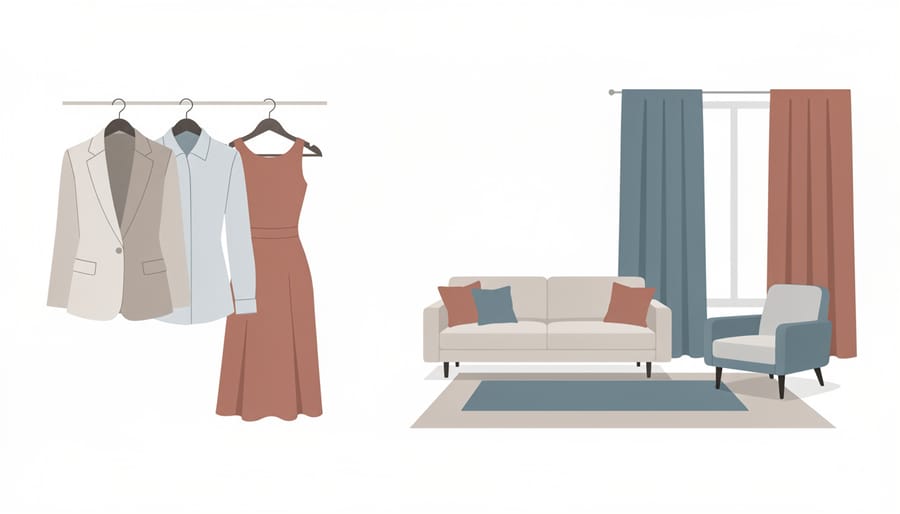
Open your closet and pull out the five pieces you wear most often. Notice the colors, maybe it’s navy blazers, grey chinos, and white shirts, or perhaps earth tones dominate your rotation. These recurring shades reveal your true color palette the one that makes you feel most yourself.
Now apply the 60-30-10 rule that works identically in fashion and interiors. Your dominant clothing color (say, navy) becomes 60% of your room, wall paint or large furniture. Your secondary shade (grey) covers 30%, sofas, rugs, major textiles. That accent you love (burnt orange tie, maybe) takes up 10%, throw pillows, artwork, small decor.
If you consistently reach for charcoal, cream, and burgundy in your wardrobe, translate that directly: charcoal walls, cream sofa, burgundy cushions. The proportions create visual balance in both contexts. Don’t overthink it, your clothing choices already prove these colors complement each other and suit your personality. You’re simply expanding the canvas from your body to your living room.
Step 2: Match Textures and Fabrics
Start by examining the fabrics you reach for most often in your wardrobe. If your go-to pieces feature smooth leather jackets and polished cotton shirts, you’re drawn to refined, sleek textures. If you favor chunky knit sweaters and raw denim, you prefer tactile, substantial materials. This isn’t random, your hands and eyes naturally gravitate toward certain sensory experiences.
Take that same preference into your home. Smooth leather clothing translates beautifully to leather furniture or sleek metal fixtures. A love for soft cashmere sweaters suggests you’ll appreciate velvet cushions, plush throws, or brushed wool rugs. Your rough denim habit? Consider raw linen curtains, textured concrete accents, or reclaimed wood furniture.
The key principle: maintain tactile consistency across both domains. Don’t wear exclusively soft, draped fabrics then fill your home with hard, glossy surfaces. The disconnect will feel jarring. Instead, aim for 70% overlap in texture families between wardrobe and home. If you layer wool, cotton, and suede in your outfits, echo those natural, matte textures in your living space through similar materials. Your environment should feel as comfortable to touch as your favorite shirt.
Step 3: Apply the Layering Technique
Just as a well-layered outfit creates visual depth through contrasting textures and complementary pieces, your living space needs the same approach. Start with your foundational layer: in fashion, that’s your base tee or shirt; at home, it’s core furniture like sofas, beds, and essential storage. These pieces should be neutral and timeless, much like the white shirts or grey tees that anchor your wardrobe.
Next comes your middle layer. In clothing, this might be a sweater, blazer, or denim jacket that adds personality without overwhelming. Translate this to accent furniture and larger decorative items: a distinctive armchair, patterned rug, or textured throw blanket that introduces character while complementing your base pieces.
Finally, add your outer layer through decorative details. Just as accessories complete an outfit (watches, scarves, pocket squares), finishing touches complete a room. Think cushions, artwork, books, and small objects that reflect your interests. Each layer should be removable or adjustable, giving you flexibility to refresh the overall look without starting from scratch. This approach prevents both your outfits and rooms from feeling flat or one-dimensional.
Step 4: Establish Focal Points and Statement Pieces
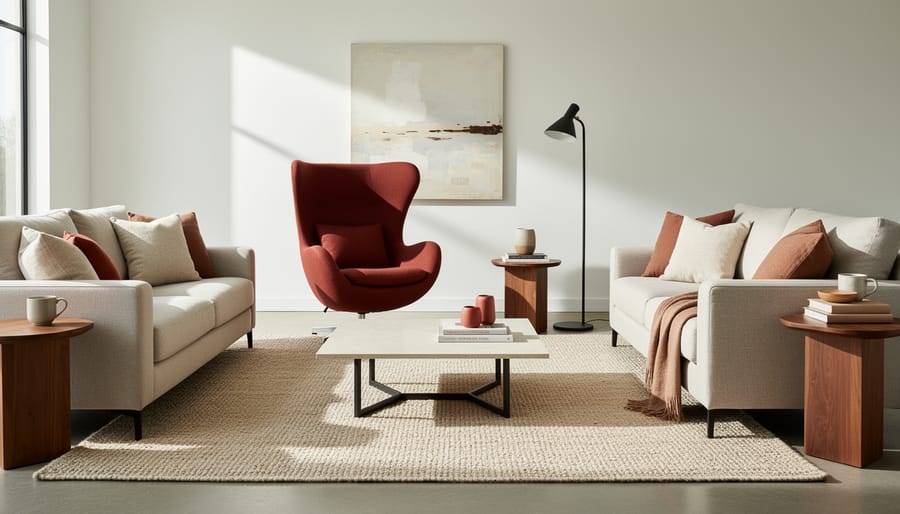
Every well-styled outfit has that one piece that catches the eye first, the leather jacket that pulls the whole look together, the vintage watch that sparks conversation, the bold sneakers that add personality. Your home needs the same anchoring effect.
The principle is identical: one standout element per space, just as you’d wear one statement piece per outfit. That burgundy velvet armchair becomes your living room’s equivalent of a camel overcoat. An oversized abstract painting serves the same function as your favorite graphic tee. The key is ensuring everything else in the room supports rather than competes with this focal point.
Start by asking what draws your eye when you enter each room. If nothing stands out, you’re missing an anchor. If three things fight for attention, you’ve overwhelmed the space. Choose deliberately: a sculptural floor lamp, an antique credenza, a striking rug. Then style around it with complementary pieces that let it shine.
This restraint takes confidence. But just as wearing a bold patterned shirt means keeping your pants and shoes simple, placing a statement piece requires surrounding it with visual breathing room.
Step 5: Balance Proportions and Fit
Just as you wouldn’t wear an oversized blazer in a fitted outfit or squeeze into skinny jeans when your frame calls for straight-leg cuts, furniture must match your room’s dimensions. A bulky sectional overwhelms a 12×14 living room the same way an oversized parka swallows a lean build. Measure your space before buying furniture, leaving at least three feet of walkway clearance, and choose pieces that fill roughly two-thirds of the available area. Taller ceilings accommodate vertical elements like tall bookshelves or floor lamps, mirroring how taller men can pull off longer coats. If you favor tailored, fitted clothing, opt for streamlined furniture with clean lines and visible legs. If your style leans relaxed and oversized, plush sofas and chunky coffee tables will feel right. The principle remains identical: proportion creates visual harmony and functional comfort in both domains.
Step 6: Create Cohesive ‘Outfits’ for Each Room
Think of each room as a complete outfit where every piece needs to earn its place. Start with your anchor, a sofa or bed acts like your foundational layer, similar to well-fitted trousers and a quality shirt. From there, add complementary pieces that enhance rather than compete, just as you’d choose a blazer that works with your base layers, not against them.
Here’s your quick reference for styling any room:
- Select your base layer (major furniture in neutral or signature color)
- Add your middle layer (accent chairs, side tables, area rugs)
- Layer in texture through textiles (cushions, throws, curtains)
- Choose one statement piece (artwork, lighting, or sculptural furniture)
- Edit ruthlessly, remove anything that doesn’t serve the aesthetic
- Adjust proportions until the space feels balanced
When mixing patterns, apply the same rule you use for ties and pocket squares: vary the scale. A large geometric rug pairs with smaller patterned cushions the way a bold check shirt works under a fine pinstripe blazer. Stick to a consistent color story across patterns, if your wardrobe leans toward navy and grey, your living room’s patterns should share that palette even when mixing florals with stripes.
Clutter kills cohesion faster than anything else. If you wouldn’t wear three watches simultaneously, don’t crowd your coffee table with seven decorative objects. Choose three to five carefully curated pieces per surface, grouped in odd numbers, and leave breathing room between them. Every item should either serve a function or spark genuine joy, no middle ground.
Testing and Refining Your Style Crossover
You’ve completed the physical work, but the real test lies in living with your choices. Spend at least two weeks in your newly styled space before making any judgments. Notice how you feel when you enter each room wearing different outfits. True wardrobe-home harmony creates a sense of ease, like everything belongs together, including you.
Start with the gut check. Do you feel more confident bringing someone home now? When you get dressed in the morning, does your reflection feel like it matches your surroundings? If something feels off, you’re not imagining it. Trust that instinct the same way you’d notice when a jacket doesn’t quite fit right.
Pay attention to what catches your eye repeatedly. If you keep noticing a throw pillow that clashes with your go-to shirt colors, that’s a signal. Similarly, if you find yourself avoiding certain rooms while wearing your favorite pieces, the disconnect is real. Document these observations in your style notebook rather than making rushed changes.
Ask for honest feedback from friends who know your style well. You’re not looking for compliments, you want someone to confirm whether your space feels like an extension of you. The best validation comes when a visitor says, “This is so you,” without prompting.
Your style will evolve, and that’s the point. Revisit this assessment quarterly. As your wardrobe shifts toward different colors or silhouettes, your home should adapt gradually. Swap out smaller elements first, textiles, artwork, accessories, before committing to major furniture changes. Style crossover isn’t a one-time project but a continuous conversation between how you dress and how you live.
Common Style Archetypes and Their Home Translations
Your existing wardrobe likely already signals your ideal home aesthetic. The minimalist who favors clean-lined clothing in neutral tones should embrace Scandinavian interiors with white walls, light wood furniture, and functional pieces that serve dual purposes. If you wear simple tees, tailored trousers, and monochrome sneakers, your home thrives with streamlined sofas in gray or beige, open shelving, and strategic negative space. Think MUJI meets Uniqlo translated into IKEA’s best offerings.
Rugged individualists who reach for raw denim, leather boots, and flannel shirts belong in industrial spaces. Exposed brick walls, metal fixtures, and reclaimed wood tables mirror the durability and authenticity of heritage workwear brands. Your distressed leather jacket finds its counterpart in a worn leather armchair. That canvas messenger bag’s utilitarian vibe matches open metal shelving and Edison bulb lighting.
Men who gravitate toward classic style with Oxford shirts, navy blazers, and brogues should consider traditional interiors featuring rich wood tones, tailored upholstery, and timeless furniture silhouettes. Chesterfield sofas echo the structure of your suit jackets, while Persian rugs complement your leather dress shoes. Brass fixtures and dark wood bookshelves complete the refined gentleman’s aesthetic.
Streetwear enthusiasts who collect limited-edition sneakers and graphic hoodies thrive in eclectic spaces mixing bold colors, pop art, and unexpected combinations. Your sneaker wall display becomes gallery-style art arrangements. The vibrant colorways of your clothing translate to accent walls in deep blues or burnt orange, paired with modern furniture in unusual shapes and statement lighting fixtures.
Smart casual wardrobes built on chinos, polo shirts, and loafers align perfectly with mid-century modern homes. The clean sophistication of this look matches teak furniture, geometric patterns, and that balance between formal and relaxed. Your suede desert boots’ warm tones correspond to walnut credenzas and mustard accent chairs.
Finally, athleisure devotees wearing performance fabrics and sleek joggers should embrace contemporary comfort interiors. Modular sofas in technical fabrics, streamlined storage solutions, and neutral palettes with pops of color mirror your wardrobe’s form-meets-function philosophy. Your moisture-wicking gear’s innovation translates to smart home features and adaptable furniture systems.
Frequently Asked Questions
Starting this crossover can raise practical questions, especially when your current setup doesn’t align perfectly with the vision. Here are answers to the most common concerns.
What if my wardrobe style doesn’t match my current home?
Start by identifying which domain feels more authentically “you” right now. If your wardrobe reflects your true style but your home doesn’t, treat your living space as the project that needs updating. Conversely, if you love your home aesthetic but your closet feels disconnected, use your interior as the blueprint for refreshing your wardrobe gradually.
Can I apply this if I live with a partner who has different taste?
Absolutely. Focus on shared spaces by finding common ground in your style preferences, perhaps you both appreciate natural textures or a certain color family. Reserve personal spaces like a home office or closet for expressing your individual aesthetic fully, creating harmony in communal areas while maintaining distinct zones.
How much should I budget for this transformation?
You don’t need a complete overhaul. Start with 10-15% of what you’d spend on a seasonal wardrobe refresh, focusing on small accent pieces like throw pillows, artwork, or textiles that echo your clothing palette. Most men find that £200-500 covers initial styling updates, with larger furniture investments made gradually over six to twelve months.
Do I need to redecorate everything at once?
No, and you shouldn’t. Tackle one room at a time, just as you’d build a capsule wardrobe piece by piece. Begin with the space you use most, typically the bedroom or living room, and let it serve as your proof of concept before expanding the approach throughout your home.
How do I maintain consistency when styles evolve?
Treat both your wardrobe and home as living projects that grow with you. When you notice your clothing preferences shifting, say, from streetwear toward refined casual, allow your home to evolve in parallel through small updates rather than fighting the change. The key is keeping the pace of evolution similar in both domains, so neither feels frozen in time while the other progresses.
The beauty of this approach is its flexibility. You’re not locked into a single aesthetic forever, and the parallel evolution actually makes transitions smoother. When your style matures in one area, you’ll have a clear roadmap for updating the other, maintaining that cohesive personal brand without starting from scratch each time your tastes develop.
Mastering the art of styling your clothes and your home isn’t about creating a showroom or a magazine spread. It’s about building a cohesive personal brand that reflects who you are, whether you’re heading to a meeting or relaxing on your sofa. When your environment mirrors your wardrobe, you’re not code-switching between different versions of yourself. You’re living authentically in spaces that reinforce your confidence and taste.
The beauty of this approach lies in its flexibility. You don’t need to overhaul everything overnight. Start with a single room, maybe your bedroom or home office. Identify one principle from your wardrobe that resonates, whether it’s your preference for neutral tones, your love of clean lines, or your knack for layering textures. Apply that same instinct to your space and watch how natural it feels.
Your style will evolve. Your wardrobe changes with new discoveries and shifting preferences, and your home should too. This isn’t a one-time project but an ongoing conversation between the clothes you wear and the spaces you inhabit.
This week, audit your wardrobe. Notice what you reach for repeatedly. Then look around your home and ask yourself: does this space feel like the same person lives here?