
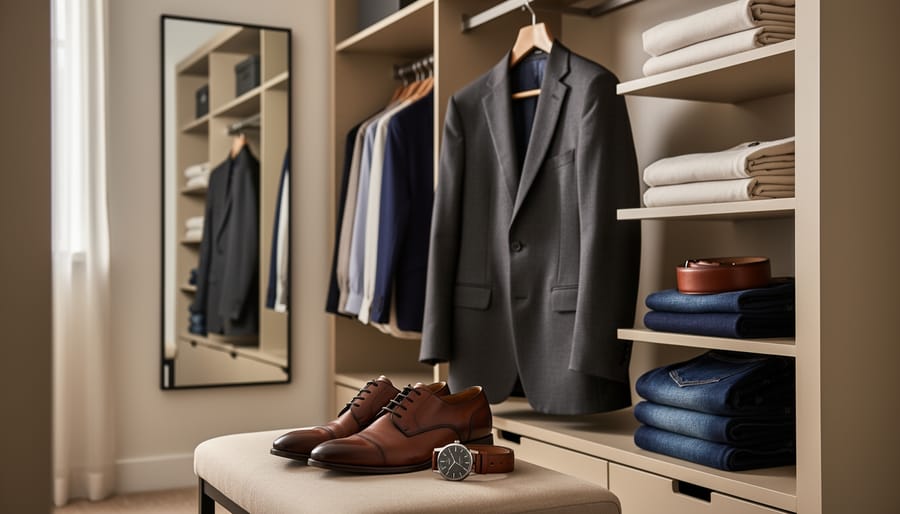
Building a wardrobe from scratch requires a system: start with versatile foundation pieces in neutral colors, layer in complementary items that multiply outfit options, then add personality through carefully chosen accents. This approach takes 3 to 6 months depending on your budget and prevents the expensive mistake of impulse purchases that never work with anything else you own. The method mirrors how architects approach interior spaces, prioritizing function before decoration.
Most men face an empty closet at pivotal moments. A new job, a lifestyle change, or simply the realization that nothing fits or feels right anymore. The impulse is to fill the void quickly, but that’s exactly when you’ll waste the most money. You’ll grab whatever catches your eye, only to discover three months later that your closet is full yet you still have nothing to wear.
The real challenge isn’t finding clothes. It’s building a collection where every piece works with multiple others, creating exponential outfit combinations from a finite number of items. This concept borrows from design principles used in home decoration: establish your foundation first, then build layers that enhance rather than clutter.
Starting with a blank slate is actually an advantage. You’re not constrained by past mistakes or forced to work around pieces that don’t serve you. You can be intentional about every addition, ensuring each item earns its place through versatility, quality, and alignment with how you actually live.
This guide walks you through the exact sequence, from identifying what you truly need to verifying that each purchase moves you forward. You’ll learn which items to prioritize, how to spot quality that lasts, and when to stop before your wardrobe tips from curated to chaotic. The goal isn’t more clothes. It’s the right clothes, working together as a system.
What You’ll Need Before You Start
Before you buy a single piece of furniture, gather the tools that prevent expensive mistakes and buyer’s remorse. Think of this as your pre-shopping ritual, the same way you’d check your closet before a major clothing overhaul to see what actually works and what needs replacing.
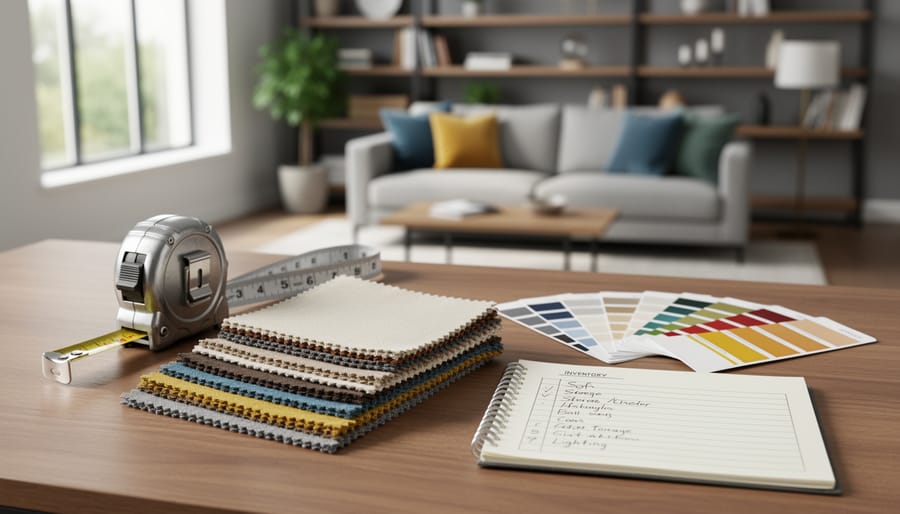
Start with the practical measurement kit. You need a measuring tape, your room dimensions written down (length, width, ceiling height), and measurements of doorways, stairwells, and elevators. That sectional won’t matter if it can’t make the turn into your building. Measure twice, order once.
Next, create your planning documents:
- Budget worksheet breaking down total spend and allocation per room
- Room dimension sketches with furniture placement options marked out
- Inspiration collection where you build inspiration board using Pinterest, Instagram saves, or physical magazine tearouts
- Style profile notes identifying your 2-3 core aesthetic descriptors
- Lifestyle audit documenting how you actually use each space daily
The lifestyle audit matters more than most men realize. Do you work from home or commute? Entertain weekly or monthly? Cook elaborate meals or rely on takeout? Your space should support how you live, not an aspirational version of yourself. If you’ve never hosted a dinner party, that eight-person dining table is the equivalent of buying a tuxedo when you need jeans.
Walk through your current space with fresh eyes. What are you keeping? Be ruthless here. That hand-me-down couch your buddy gave you three years ago might have sentimental value, but if it dictates your entire living room layout and clashes with your style direction, it’s holding you back. Photograph everything you’re keeping so you can plan around actual pieces, not memory.
This prep work takes two to three hours but saves weeks of returns and thousands in wrong purchases.
Know Your Style Profile (Before You Buy a Thing)
Before you browse a single furniture store or save a Pinterest board, you need to answer one question: what’s your home’s style identity? Just as you wouldn’t mix formal suits with graphic streetwear randomly, your space needs a coherent aesthetic direction that guides every purchase and prevents the expensive mistake of collecting beautiful pieces that clash.
Start by identifying 2-3 core style descriptors that resonate with how you live and what you’re drawn to. These work like genre tags: modern minimal, warm industrial, classic casual, Scandinavian functional, urban contemporary, traditional refined. Pick descriptors that feel authentic to you rather than what looks impressive on Instagram. A tech professional working from home might lean modern minimal with warm industrial accents, while someone hosting regularly might prefer classic casual with traditional touches. These descriptors become your filter, every piece you consider should align with at least one of them.
Once you’ve named your style, translate it into tangible decisions. Your color palette comes first: choose 2-3 neutral base colors (charcoal, warm gray, cream, navy) that will cover 70-80% of your large pieces, plus 1-2 accent colors for smaller items and textiles. This is identical to building a capsule wardrobe where most pieces are versatile neutrals. Then define your texture preferences, does your style lean smooth and polished (leather, glass, lacquered wood) or textured and organic (linen, raw wood, matte metals)? Write these down. They’re your buying criteria.
Apply the 80/20 rule ruthlessly: 80% of what you buy should be timeless foundation pieces that transcend trends and will look current in a decade. The remaining 20% is where you keep trends and inject personality, a bold throw pillow, an art piece, a statement lamp. This ratio ensures your space evolves without requiring a complete overhaul every few years. Gather style inspiration images that match your descriptors, then analyze what they share: similar color temperatures, repeated materials, consistent lines (clean and angular versus soft and curved). That pattern is your blueprint, and it makes every subsequent decision simpler because you’re shopping with criteria, not just wandering until something catches your eye.
The Foundation Pieces: Your Home’s Basics
Living Room Essentials
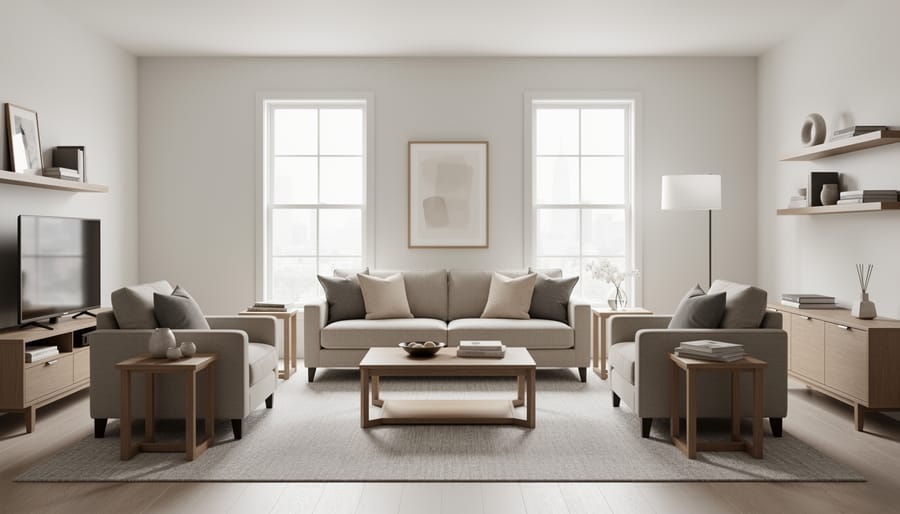
Your living room sofa is the tailored suit of your home, the single piece that defines the room’s character and demands the largest share of your budget. Invest in a neutral tone: charcoal, navy, camel, or greige. These colors anchor without dating, allowing you to shift accent pieces as your taste evolves. Aim for quality construction, hardwood frame, eight-way hand-tied springs if budget allows, because you’ll sit on this daily for years. Skip trendy silhouettes; choose timeless basics like a three-seater with clean lines and comfortable depth.
Your coffee table should be functional first, stylish second. It needs to hold drinks, books, and remote controls without overwhelming the room. Wood or metal in simple shapes work best, avoid glass if you’re not meticulous about smudges.
Lighting makes or breaks livability. You need overhead for general illumination and a floor or table lamp for task work and ambiance. Dimmable options give you control.
Finally, a foundational rug defines your seating area and adds warmth underfoot. Choose a size that extends beyond the sofa’s front legs, too small reads as an afterthought. Neutral patterns in wool or durable synthetics handle traffic and anchor your color scheme. These four pieces form the backbone; everything else layers on top.
Bedroom Fundamentals
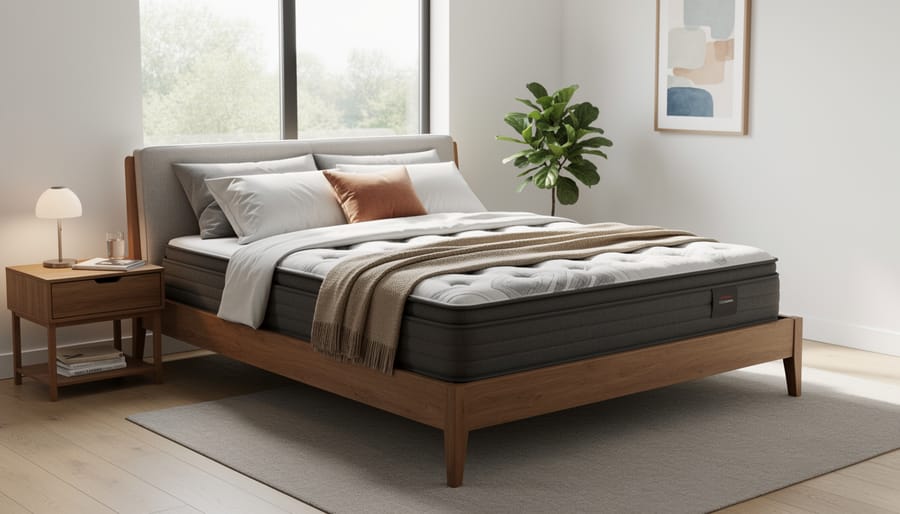
Your bedroom is where you spend roughly a third of your life, making it the equivalent of investing in quality dress shoes and a well-fitted suit, these aren’t areas to cheap out. The foundation pieces here directly impact your sleep quality, morning routine, and overall well-being.
Start with the bed frame and mattress as your non-negotiables. A solid bed frame in wood or metal provides structural integrity and sets the room’s visual tone; choose a neutral finish that won’t clash if your style evolves. The mattress deserves 40-50% of your bedroom budget. Test it in-store, lie down for at least 10 minutes, and prioritize support over gimmicks. A quality mattress lasts 7-10 years, that’s under $1 per night for a $2,000 investment. Skip the adjustable bases and cooling gel layers until you’ve nailed the fundamentals.
Blackout capability comes next. Whether it’s lined curtains or cellular shades, controlling light transforms sleep quality. This is your tailoring, the detail that makes everything else work better. You’ll notice the difference immediately, especially if you work irregular hours or live in a bright area.
Finally, functional storage keeps the room from becoming cluttered chaos. A dresser or closet system that actually accommodates your clothing means you’ll maintain the space instead of fighting it. Think of this as your closet organization, essential infrastructure that makes daily life smoother. These four elements create a bedroom that genuinely restores you, not just a place where you happen to sleep.
Kitchen and Dining Basics
Your kitchen and dining foundation centers on three purchases: a dining table with chairs, a basic dishware set, and essential cookware. These are the “dark jeans and white shirts” of your home, versatile, used constantly, and worth choosing carefully.
Start with the dining table. Size it to your space and typical guest count, not your once-a-year hosting fantasy. A table for four works for most men, with the option to expand if you entertain regularly. Choose a neutral finish, wood tones or black, that coordinates with your overall style profile. Pair it with comfortable chairs you’ll actually sit in for more than ten minutes. Test them in-store if possible.
For dishware, resist the urge to collect mismatched vintage plates or elaborate serving pieces. Buy one complete set: dinner plates, bowls, mugs, and glasses for four to six people. White or neutral tones layer with everything and photograph well. You’ll add personality later through linens and serving pieces once you know what your space needs.
Essential cookware means one quality skillet, one saucepan, one stockpot, and basic utensils. Avoid themed gadgets and specialty pans until you’ve cooked enough to know you’ll use them. This minimal kit handles 90% of home cooking, just like a capsule wardrobe handles most situations without excess.
Build competence with the basics before expanding. Niche pieces come later, once your foundation proves itself through daily use.
Step-by-Step: Building Your Home Wardrobe
Step 1: Set Your Budget and Timeline
Before you swipe a single credit card, get honest about two things: how much you can spend and how long you’re willing to wait. Most men underestimate both.
Start with your total budget. If you’re furnishing a one-bedroom from scratch, expect $3,000-$8,000 for livable basics. Two bedrooms? Add another $2,000-$4,000. Write the number down, not what you wish you had, what you actually have.
Now split it using the 50/30/20 framework. Allocate 50% to foundation furniture: your sofa, bed, dining table. These anchor pieces dictate everything else, so they get the lion’s share. The next 30% covers functional add-ons, side tables, lamps, storage, rugs. The final 20% is for decorative elements: art, pillows, plants, the stuff that makes it yours.
Timeline matters as much as money. Plan 3-6 months to secure your essentials. That’s not lazy shopping, it’s strategic patience. You’ll catch sales, avoid panic buys, and give yourself time to measure, compare, and confirm each piece works.
The personality layers? They’re ongoing. You’ll add and refine for years, same as you would a clothing wardrobe. Rushing kills style. Budget and timeline keep you intentional.
Step 2: Prioritize by Room Function
Not all rooms deserve equal attention when you’re starting from zero. Your priority order should mirror how you actually live, not how you imagine hosting dinner parties someday.
Start with your bedroom. You spend eight hours there every night, and quality sleep directly affects your work performance, mood, and health. A solid bed setup pays immediate dividends, much like investing in good work shoes when you’re on your feet all day.
Next comes your living room, assuming you spend evenings there unwinding or occasionally having friends over. This is your daily-wear space. It needs to function first, impress second.
Guest rooms, formal dining areas, and home offices come later unless your work demands otherwise. If you’re remote full-time, bump the office up the list. Hosting family monthly? Prioritize guest comfort sooner.
The principle is simple: furnish the rooms you use daily before the ones you use occasionally. Career professionals build work wardrobes before vacation clothes because that’s where they spend their time. Apply the same logic here, your lifestyle dictates the sequence, not aspirational living or design magazine ideals.
Step 3: Shop the Foundation (One Room at a Time)
Start with the largest, most essential piece in your chosen room, typically the sofa for living spaces or bed frame for bedrooms. Before you click buy or hand over a credit card, measure the item’s dimensions and your doorways, hallways, and staircases. A sectional that fits the room perfectly but can’t make the turn at your landing is a $2,000 mistake.
Visit showrooms when possible. Floor models reveal how fabric wears, whether cushions maintain support, and if that modern silhouette actually feels comfortable after ten minutes of sitting. Many retailers discount floor samples, you’re getting the same quality with minor cosmetic imperfections at 20-40% off.
Resist package deals that bundle accent chairs or side tables you don’t love. Retailers push these because they move inventory, not because the pieces work together. You’re building intentionally, not filling space. Buy only the anchor piece that meets your style profile and budget, even if it means the room looks sparse initially.
Verify delivery timelines before purchasing. Quality foundation pieces often require 6-12 weeks for delivery. Plan accordingly, ordering your sofa before smaller items ensures you’re not working around an incomplete room for months.
Step 4: Add Functional Layers
With your anchor pieces in place, you’re ready for the functional layers that make daily life work smoothly. These are your workhorses, the items you interact with constantly but rarely think about when they’re doing their job well.
Start with lighting that serves specific tasks. Table lamps for reading, floor lamps for ambient glow, desk lighting if you work from home. Overhead fixtures alone create harsh, flat spaces. Layer your light sources at different heights, just as you’d layer a henley under a button-down for depth.
Next, address storage gaps you’ve discovered while living in the space. Nightstands with drawers keep bedside chaos contained. Console tables corral keys and mail. Bookshelves do more than hold books, they display your life in curated doses.
Window treatments control light, temperature, and privacy. Blackout curtains in the bedroom aren’t optional if you value sleep. Living room sheers soften harsh sunlight without blocking views.
These purchases feel less exciting than your sofa, but they’re what transform a staged room into a lived-in, functional home. Buy them methodically, one room at a time, testing each addition before moving forward.
Step 5: Introduce Texture and Warmth
With your foundation and functional pieces in place, it’s time to soften the space. Think of this step like adding a scarf or watch to an outfit, these textiles won’t change the room’s structure, but they’ll make it feel lived-in and inviting.
Start with throw pillows in complementary textures. Mix materials rather than patterns: linen, velvet, cotton weave. Two or three per sofa is sufficient. Add a quality throw blanket draped over an arm or folded at the foot of your bed. Choose natural fibers like wool or cotton that actually feel good to use, not decorative-only options.
Layer rugs if your foundational choice was neutral, a smaller, textured rug over sisal adds warmth. Curtains frame windows and control light; linen panels in a neutral tone work in most spaces and soften hard edges without overwhelming.
These pieces are forgiving. Wrong color? Swap it next season. They let you experiment with warmth and personality while your bigger investments stay consistent.
Step 6: Add Personality Through Art and Objects

This final layer transforms a functional space into your space. Wall art, books, plants, and personal objects represent the 20% that reflects who you are, but only after you’ve lived with the foundation long enough to know what the room is asking for.
Start with blank walls and empty shelves. Resist the urge to fill every surface immediately. Spend two weeks in the space. Notice where your eye naturally lands when you enter. Those spots are prime real estate for a statement piece of art or a curated shelf.
When selecting art, choose pieces that genuinely resonate rather than what matches the sofa. One large canvas often anchors a room better than a scattered gallery wall. For plants, consider your actual lifestyle: low-maintenance pothos or snake plants beat high-maintenance fiddle leaf figs if you travel frequently.
Books and personal collections should earn their display space. Stack three books you’ve actually read on the coffee table, not a decorative pile you bought by the pound. Display objects that tell a story, your grandfather’s watch, travel finds, a vintage camera you use.
The curation rule: if you wouldn’t wear it, don’t display it. Edit ruthlessly. Empty space is confident; clutter is anxious.
Red Flags and When to Stop
You’ll know you’ve gone too far when shopping stops feeling purposeful and starts feeling compulsive. If you’re browsing furniture stores three times a week, buying items before your existing pieces arrive, or constantly second-guessing what you’ve already chosen, you’ve crossed from intentional building into reactive buying. That’s the moment to step back.
The biggest red flag is forcing a style that doesn’t match how you actually live. A white linen sofa might look stunning on Instagram, but if you eat dinner on the couch every night or have a dog, you’re setting yourself up for constant anxiety. Similarly, buying a formal dining set when you’re a kitchen-island guy is wasting money on an identity that isn’t yours. Your home should reduce friction in your life, not create it.
Decision fatigue is real and insidious. If you find yourself unable to choose between options, mentally exhausted after two hours in a store, or making choices just to be done with the process, you need to stop. Walk away. Good decisions don’t come from burnout. Schedule another trip when you’re fresh, or revisit the choice after living with your existing setup for a week.
The most dangerous trap is the marathon shopping day where you try to furnish an entire room in one go. Retailers love this because overwhelmed buyers make impulsive decisions. You’ll end up with mismatched pieces, compromise choices, and buyer’s remorse. Treat major purchases like a capsule wardrobe: buy one anchor piece, live with it, then thoughtfully add what works around it. Patience isn’t delay, it’s strategy.
How to Know When Your Home Wardrobe Is Complete
You’ll know your home wardrobe is complete when you stop browsing furniture sites out of necessity and start living in your space without mentally rearranging it. The real test isn’t whether every surface is styled, it’s whether the room serves your daily life without friction. Can you host friends without apologizing for missing pieces? Do you reach for what you own rather than wishing you had something else?
Start with a room-by-room functionality audit. In your living room, test whether seating accommodates your typical gathering size and lighting works for both reading and conversation. Your bedroom should support quality sleep without workarounds, blackout works, storage holds your clothes, surfaces aren’t cluttered with homeless items. The kitchen needs to handle your actual cooking habits, not aspirational ones. If you’re working around problems daily, the foundation isn’t complete.
Live with your setup for at least two weeks before adding more. This waiting period reveals what’s actually missing versus what you think looks incomplete. You might discover that empty wall doesn’t need art, it needs better lighting. Or that you don’t use the coffee table books you thought would tie the room together.
Cohesion shows up in sightlines. Stand in doorways and scan each room. Does your eye move smoothly, or does something jar? Successful spaces repeat 2-3 colors and similar material finishes without being matchy. Your style descriptors should be evident but not screaming. A modern minimal room shouldn’t suddenly feature rustic farmhouse accents unless that contrast is intentional, not accidental accumulation.
The ongoing refinement phase starts only after your foundation is stable. Swap throw pillows seasonally, rotate art, upgrade your sofa in two years when budget allows. But these changes should feel like updates, not corrections. You’re refining a working system, not constantly trying to make it work for the first time.
Common Questions About Building a Home Wardrobe
Building a home from scratch raises practical questions that most guys hesitate to ask. Here are the answers to the concerns that come up most often when you’re starting with an empty space.
How long does it really take to furnish a home properly?
Plan for three to six months to establish your foundation pieces across main living areas, then another six to twelve months for refinement and personality layers. Rushing this process typically leads to expensive mistakes and a space that feels borrowed rather than yours.
Can I mix different styles between rooms?
Yes, but maintain a connecting thread through color palette, material choices, or overall formality level. Your bedroom can lean more minimal while your living room is warmer and textured, as long as they share complementary tones or finishes that create flow rather than whiplash.
What if I’m renting and can’t make permanent changes?
Focus your budget on portable foundation pieces, quality sofa, bed frame, rugs, and lighting, that move with you. Use removable solutions like peel-and-stick wallpaper, tension rods for curtains, and freestanding storage instead of built-ins.
How do I incorporate hand-me-downs or pieces I already own?
Assess each item honestly: does it fit your style profile, does it function well, and is it in good condition? Keep pieces that meet at least two of those criteria and use them as placeholders while you save for upgrades, or integrate quality inherited pieces as foundation anchors if they align with your vision.
The timeline question trips up most men because retail marketing pushes the idea that you can fully furnish in a weekend. That approach works if you want a generic showroom, not a home that reflects who you are. Give yourself permission to live with less initially while you make considered choices.
Mixing styles successfully requires restraint. If your living room is mid-century modern, your bedroom can be more industrial as long as you repeat wood tones, metal finishes, or a shared neutral base. The mistake is jumping from coastal blues in one room to dark moody tones in the next with no visual bridge.
For renters, remember that 80 percent of what makes a space feel complete is furniture and decor, not the bones of the room. Invest in pieces that work in multiple spaces and lifestyles. A quality leather sofa fits a loft or a suburban rental equally well.
Hand-me-downs deserve honest evaluation, not automatic acceptance. Your parents’ dated dining set might have sentimental value, but if it clashes with everything you’re building and you dread looking at it, donate it guilt-free. On the other hand, a solid wood dresser or well-made armchair can be reupholstered or refreshed to fit your aesthetic. Function and quality matter more than matching a showroom.
Building a home you’re proud of takes the same patience and intention as developing signature personal style. You wouldn’t assemble a refined wardrobe in a weekend, and your living space deserves the same thoughtful approach. The confidence you feel walking into a room that truly reflects you is every bit as powerful as the confidence that comes from knowing you look put together.
Start with one room. Get the foundation right. Live with it, adjust it, then move forward. This isn’t about racing to a finished product or filling every corner by next month. The best spaces, like the best personal style, evolve as you do. They’re built on intentional choices, not reactive purchases made to fill a void or chase a trend you saw online.
Remember that every well-dressed man started with basics and built from there. Your home follows the same logic. The sofa you research and save for will serve you better than three impulse accent chairs. The art you wait to find will mean more than walls filled with placeholder prints.
Your space is an extension of who you are. Treat it with the same care you’d give to curating what you wear, and you’ll create something that doesn’t just look good but feels authentic. That’s when a house becomes genuinely yours.