
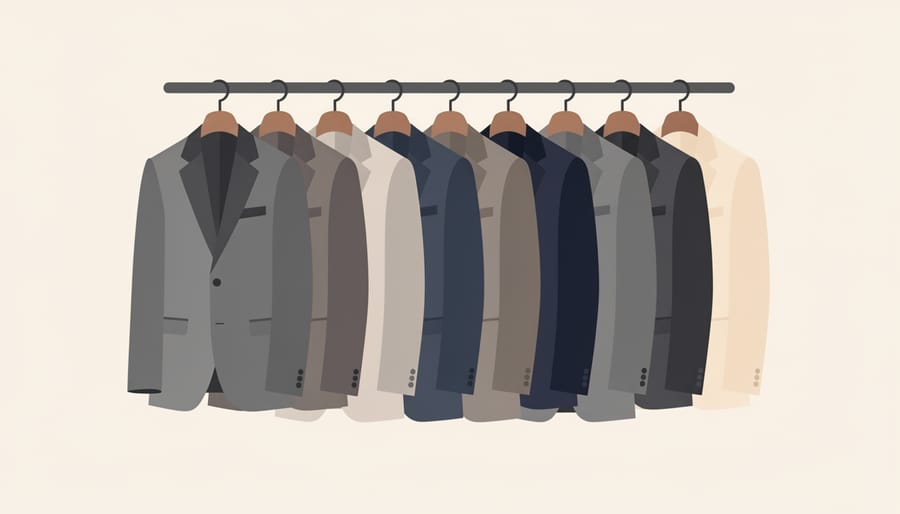
Seven suit styles cover nearly every occasion a man will face: the classic single-breasted, double-breasted, three-piece, tuxedo, linen summer suit, casual unstructured suit, and modern slim-tailored cut. Each one solves a different problem, and knowing which problem you’re solving is what keeps you from buying the wrong suit twice.
Most men don’t need all seven. A well-fitted classic single-breasted handles interviews, weddings, and client meetings on its own, which is why it anchors any wardrobe. The rest earn their place when your life calls for them: a warm-weather wedding, a black-tie invitation, a creative office where a stiff suit reads as try-hard.
We’ve sorted these seven by what they do best, so you can scan for the one that fits your calendar, your build, and your budget. Think of them as timeless suit styles rather than trends, which means the advice here holds up season after season.
Below, each style gets a clear verdict on who it suits and one styling tip you can use right away. Start with the occasion you dress for most, then work outward.
How We Chose These 7 Timeless Suit Styles
Choosing seven suit styles from the hundreds out there isn’t about guessing what’s hot this season. This list is editorial curation, built on a few clear filters rather than hands-on testing of individual garments. Each style had to earn its spot by clearing four bars:
- Longevity: the cut has stayed relevant across decades, not just a few fashion cycles.
- Versatility: it works across more than one occasion, from the office to a wedding to a dinner out.
- Flattery across builds: it looks good on a range of body types, not only one narrow frame.
- Accessibility: it’s available at many budgets, so you don’t need a luxury spend to wear it well.
A style that nails three of these but fails the fourth usually didn’t make the cut. That’s why you won’t find anything here that depends on a fleeting trend or an exotic fabric most guys will never see in a store.
Before you start comparing, one thing matters more than any style on this list: fit. A budget suit that’s tailored to your shoulders, sleeve length, and trouser break will beat an expensive one that hangs off you every time. Think of the seven styles as your options and fit as the rule that applies to all of them. Get that right, and whichever style you pick will look deliberate rather than borrowed.
The 7 Suit Styles That Never Go Out of Style
1. The Classic Single-Breasted Suit: Your Do-Everything Foundation
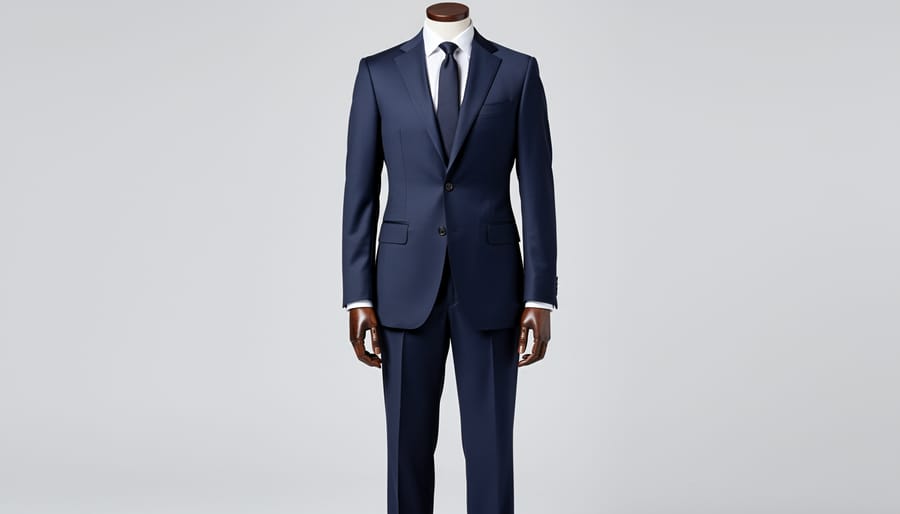
If you can only own one suit, the classic single-breasted is the one. It’s the two- or three-button jacket you picture when someone says “suit,” and it earns its place by showing up everywhere: job interviews, weddings, client meetings, funerals, even a nice dinner when you want to look like you tried.
Start with navy or charcoal. Navy reads approachable and sharp, and it flatters almost every skin tone. Charcoal leans more serious, which makes it a smart pick for conservative offices and formal events. Both pair easily with white and light blue shirts, plus a handful of ties you probably already own.
Fit details are where you personalize it. Pay attention to button stance, meaning where the top button sits. A higher stance elongates the torso, which helps if you’re on the shorter side or have a longer lower body. If you’re tall, a slightly lower stance keeps proportions balanced. Two buttons is the safer, more modern default, while three leans a little more traditional.
Lapel width matters just as much. Match it to your frame. Broader shoulders and a bigger build can carry a wider notch lapel without looking swamped. A slimmer build looks better with a moderate lapel, since an oversized one will overwhelm you.
Buy this one first and buy it well. Everything else on this list is a variation on the foundation you’re setting here.
2. The Double-Breasted Suit: Quiet Authority With a Sharp Edge
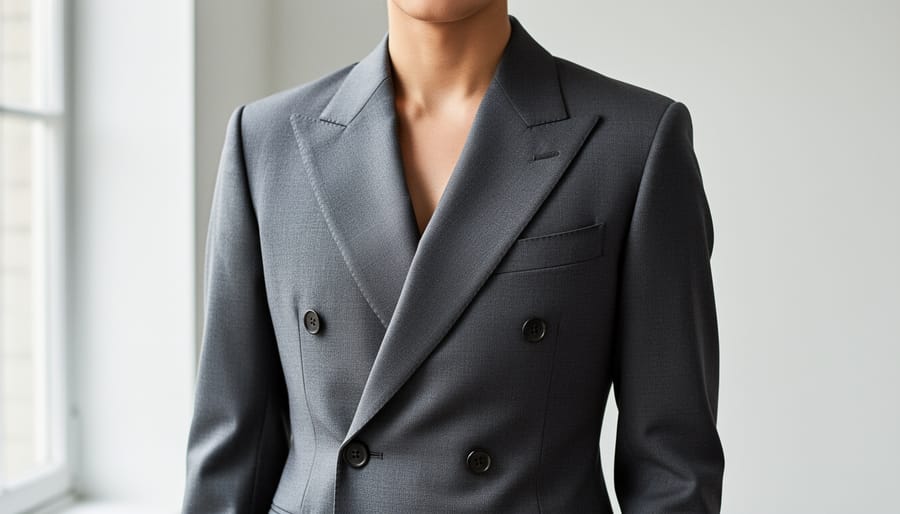
The double-breasted suit announces itself before you say a word. The jacket overlaps across the chest, usually fastened with two columns of buttons, and the peak lapels sweep upward to frame your shoulders. It’s a stronger silhouette than the single-breasted, and that’s exactly the point.
It works best when the occasion calls for presence: a business dinner, a wedding, a client meeting where you want to look like the person in charge. Navy and charcoal are the safest bets, though a pinstripe leans into the old-school power look if you want to commit.
Slimmer and athletic builds get the most out of this cut. The extra fabric across the front adds structure to a lean torso, and the strong shoulder line reinforces a V-shaped frame. If you’re broader through the middle, a six-button, two-to-fasten jacket with a slightly longer length keeps things balanced rather than boxy.
To keep it modern, choose a trim fit over a roomy one, keep the trousers tapered without being tight, and skip the loud accessories. Let the cut do the talking.
One rule matters more than the rest: keep it buttoned. A double-breasted jacket hangs awkwardly when open, and the whole shape falls apart. Fasten the main button when you stand, and undo it when you sit.
3. The Three-Piece Suit: Polished Without Trying Too Hard
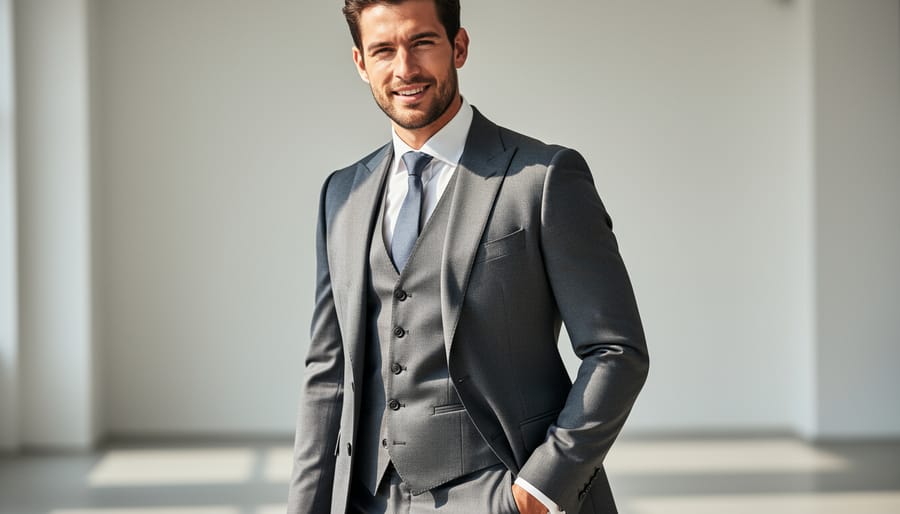
The waistcoat is what separates a three-piece from every other suit on this list. It sits between shirt and jacket, smoothing the line of your torso and adding a layer of structure that makes even a simple navy or grey look deliberate. You look put together before you’ve said a word, and without any visible effort.
It earns its place at weddings, formal dinners, and anywhere you want to look sharp without going full black-tie. In colder months it does real work too, adding warmth under the jacket without bulk. Take the jacket off at a reception and you still look finished, which is a quiet advantage.
Don’t overlook the vest as a standalone piece. Pair it with the matching trousers for a sleeker look, or wear it with different trousers and a crisp shirt for something more relaxed. It gives one purchase a few lives.
Here’s the tip that matters most: keep your proportions balanced. The waistcoat should be snug enough to lie flat against your shirt, with the bottom button left undone, and the hem should cover your trouser waistband completely. If you’re broader through the middle, choose a longer cut and a plain fabric. Slimmer guys can carry a bit more texture or a subtle check. Get that right and the whole outfit holds together.
4. The Tuxedo: The Only Formal Suit Worth Owning Outright
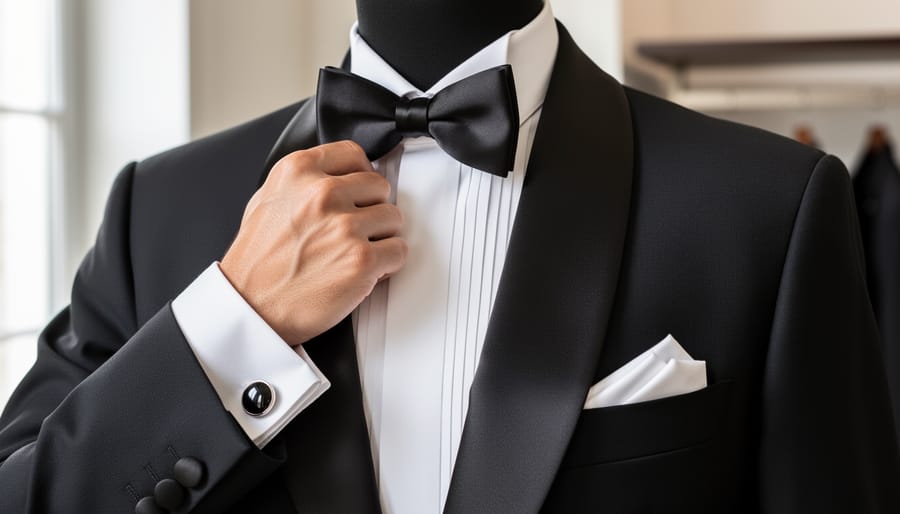
A real tuxedo is defined by details a regular suit skips. The lapels are faced in satin or grosgrain, which gives them a quiet sheen against the matte wool of the jacket. The trousers carry a matching stripe down the outseam, and there are no belt loops, since formalwear is meant to sit cleanly at the waist. Pair it with a white dress shirt, a bow tie, and black patent or polished oxford shoes, and you’ve got classic black tie.
The bow tie is the traditional call, but a slim black long tie works for a more relaxed, modern take on a semi-formal event. If you’re unsure, go with the bow tie. It signals you understood the assignment.
Rent or buy? If you wear black tie once every few years, renting makes sense. But if you attend a couple of weddings, galas, or holiday parties a year, owning one pays off quickly, and a tuxedo tailored to your frame will always look sharper than a rental. A tuxedo also doesn’t chase trends, so one good purchase can serve you for decades.
For a subtle twist, try midnight navy. Under evening light it reads almost black, but it has a richer depth that sets you apart from the sea of standard black. It’s a small move that looks deliberate, not loud.
Don’t save it only for galas, either. Wearing a tuxedo to a milestone dinner or a special date night shows real effort, and people notice.
5. The Linen or Lightweight Summer Suit: Warm-Weather Elegance

When the temperature climbs, a heavy wool suit stops being sharp and starts being a sauna. That’s where a linen or lightweight summer suit earns its place. Linen, cotton, and linen-cotton blends let air move through the fabric, so you stay cool without giving up the polish of a jacket and trousers.
Go lighter with the color. Stone, sand, light grey, soft blue, and olive all read as warm-weather confident, and they reflect heat instead of trapping it. If you’re nervous about going pale, start with a mid-tone tan or a washed navy.
Here’s the part many guys fight: linen wrinkles. Let it. A relaxed crease across the lap or elbow is part of the suit’s character, and a slightly lived-in look beats a stiff, over-pressed one in the heat. A quick steam before you leave is plenty.
This suit shines at destination weddings, daytime events, garden parties, and vacation dinners, anywhere a full wool suit would feel like punishment. Pair it with a crisp white shirt, loafers, and no socks for an easy, put-together finish.
One shopping tip: look closely at the lining. A half-lined jacket keeps structure through the shoulders and chest while leaving the back open for airflow. An unlined jacket is the lightest and most breathable of all, but it drapes softer and shows more of the seams, so it suits you best if you like a relaxed, unstructured feel.
6. The Casual Unstructured Suit: Relaxed Without Looking Sloppy
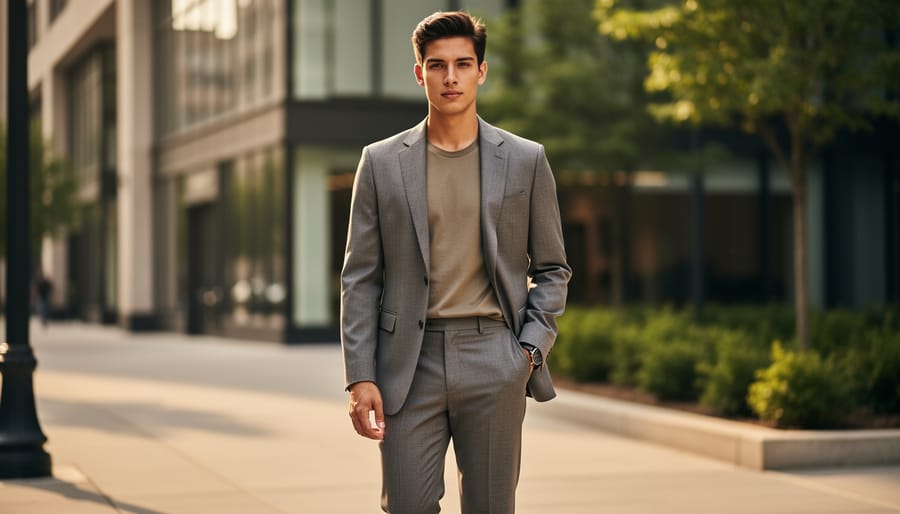
The casual unstructured suit swaps the stiff architecture of a traditional jacket for something softer. Think natural shoulders with little to no padding, minimal canvas inside, and patch pockets that sit on the outside instead of being cut into the fabric. The result moves with you, which is exactly why it feels so easy to wear.
This is the suit for people who want polish without the formality. Pair the jacket with a plain tee, a knit polo, or an open-collar shirt, then finish with clean leather or minimalist sneakers. You’ll look put together, not dressed for a boardroom. It fits right in at creative workplaces, where a full-armor suit can feel like overkill, and it’s a smart pick for date nights when you want to look relaxed but clearly made an effort.
Here’s the part most guys overlook: this style is built for splitting up. Wear the jacket with dark denim or chinos, and pair the trousers with a knit or an oxford shirt. One purchase turns into several outfits, which makes it one of the more practical buys on this list. Choose a textured fabric like cotton, a wool-linen blend, or a brushed wool, and the suit gets even more flexible across seasons and settings.
7. The Modern Slim-Tailored Suit: Sharp, Current, and Still Classic
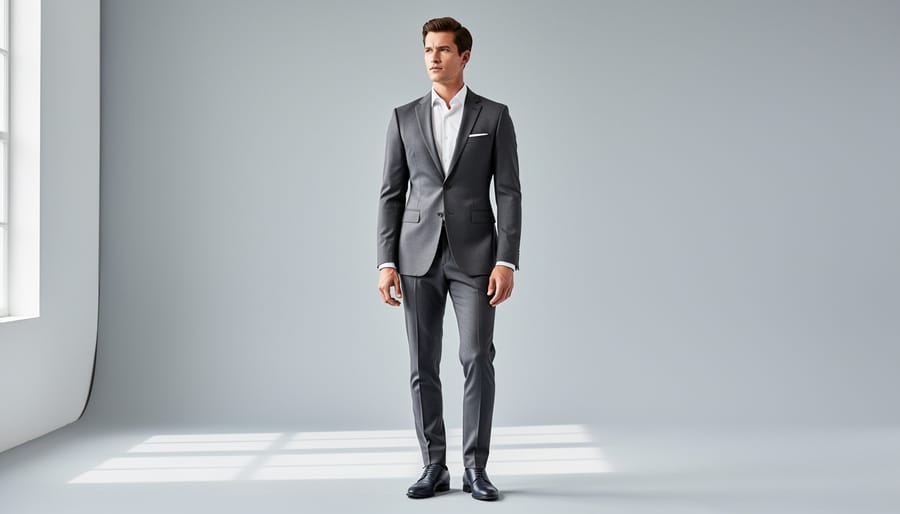
The modern slim-tailored suit is the classic cut after a good trim. You get a narrower lapel, a jacket that ends closer to the hip, and trousers that taper from knee to ankle. Done right, it looks current without chasing a fad.
The trap is going too tight. If the jacket pulls into an X at the closed button, or the trousers grip your thighs when you sit, it’s not slim, it’s small. You should be able to move your arms and sit comfortably without the fabric straining anywhere.
To keep it timeless, choose a moderate taper over extreme skinny. A leg that narrows gently ages far better than a pencil-thin one, and the same goes for lapels that sit in the middle ground rather than paper-thin.
This cut flatters lean and athletic builds best, since the trim lines follow your shape. If you carry more weight through the middle, you can still wear it. Look for a “tailored” or “slim-straight” cut instead of a true skinny fit, and let a tailor take in the waist and shorten the sleeves.
Match the cut to your frame, not the mannequin. Shoulders should sit squarely at your own shoulder line, and everything else can be adjusted from there.
Which Suit Style Fits Your Life? A Quick Match Guide
Knowing the different types of suits is one thing. Picking the one that fits your actual week is another. Start with the situation you dress for most, then let your build refine the choice.
- Job interviews call for a classic single-breasted suit in navy or charcoal.
- Black-tie events belong to the tuxedo.
- Summer weddings and destination trips pair best with a linen or lightweight suit.
- First dates work with a casual unstructured suit or a modern slim-tailored cut.
- Creative offices suit the unstructured jacket, especially when you split it into separates.
- Winter dinners and formal weddings are the moment for a three-piece.
Body type matters just as much as the occasion. If you’re slim or athletic, a double-breasted suit adds presence without bulk, and a slim-tailored cut shows off a lean frame. Broader through the chest or middle? A single-breasted jacket with a moderate lapel and a straight or gently tapered leg keeps your lines clean. A three-piece can also help here, since the waistcoat smooths the torso and adds structure.
If you can only buy one, make it the classic single-breasted in navy. It handles interviews, weddings, and office days without effort, and every other style on this list builds from it. Add a second suit once you know which occasion keeps showing up on your calendar.
Suit Shopping Questions Answered
Most suit questions come down to the same few worries: what to buy, how much to adjust it, and how to wear it without feeling stiff. Here are the answers I’d give a friend standing in the fitting room.
How many suits do I need?
One versatile suit is enough to start. Add a second once you have a reason, like a summer event or a more formal occasion that the first one doesn’t cover.
Is tailoring worth it?
Yes. Off-the-rack suits are built for an average frame, and a few tailored adjustments to the sleeves, waist, and trouser length make them look like they were made for you. Made-to-measure goes further if your proportions are harder to fit.
What color should I buy first?
Navy or charcoal. Both work for interviews, weddings, and the office, and they pair easily with the shirts and shoes you already own.
How tight should a suit fit?
The shoulders should sit flat with no divots, and the jacket should button without pulling into an X. You should move your arms comfortably, and the trousers should skim your leg rather than cling.
Can you wear a suit casually? Absolutely, and it’s one of the smartest ways to get more out of your wardrobe. The casual unstructured suit is built for exactly this, and even a classic single-breasted one loosens up when you swap the dress shirt for a tee and the oxfords for clean sneakers. Treat the jacket and trousers as separate pieces and you’ve essentially bought two outfits.
Whatever you buy, think of the whole look as a composition. The same logic behind these styling design principles applies to a suit: balance, proportion, and a clear focal point. Get the fit right first, and everything else falls into place.
The best suit isn’t the trendiest one, it’s the one that fits you properly, feels right in the fabric, and matches the life you actually lead. Get those three things sorted and you’ll look sharp for decades, whether you land on a classic single-breasted or a relaxed unstructured cut.
So don’t try to buy all seven styles at once. Start with one versatile suit, ideally a navy or charcoal single-breasted, and have it tailored until it feels like it was made for you. From there, add a tuxedo, a linen option for summer, or a double-breasted statement piece as your calendar demands. Even if you someday trade your desk for one of those cool menswear jobs that first well-fitted suit will keep earning its place in your wardrobe. Build slowly, dress with intention, and let confidence do the rest.