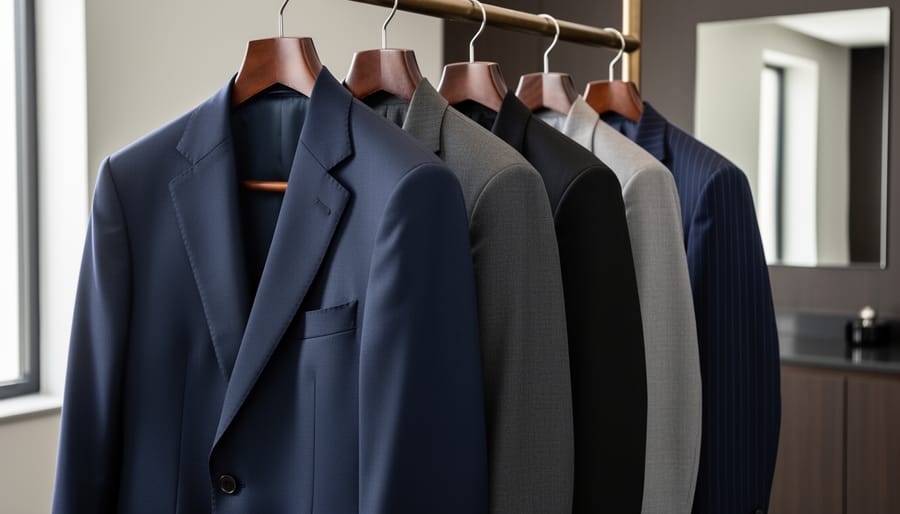
Building a timeless suit wardrobe comes down to seven essential styles: the navy single-breasted, charcoal gray two-piece, classic black, light or mid-gray, navy pinstripe, double-breasted in navy or gray, and the three-piece navy or gray suit. These aren’t arbitrary choices. Each one solves a specific wardrobe challenge while maintaining the versatility to work across weddings, interviews, business meetings, and formal events for years without looking dated.
The reality is that most men overthink suit purchases or fall into the trap of chasing seasonal trends that age poorly. A properly selected timeless suit relies on classic cuts, neutral colors, and quality construction that transcends the fleeting patterns you might see in mens casual trends. The difference between a suit that looks sharp in 2026 and one that still commands respect in 2031 often comes down to silhouette, fabric choice, and avoiding gimmicks.
What makes a suit timeless isn’t mystery or luck. It’s about understanding proportion, choosing colors that complement your existing wardrobe, and recognizing which details age well versus which ones mark you as locked into a specific era. The seven suits in this guide represent the foundational pieces that professional stylists and menswear experts consistently recommend because they’ve proven themselves across decades of changing fashion cycles.
You don’t need twenty suits. You need the right seven, worn well and maintained properly. This approach saves money, simplifies decision-making, and ensures you’re always appropriately dressed regardless of the occasion.
How We Selected These Timeless Suit Styles
Not every suit belongs in a timeless wardrobe. We built this list around five non-negotiable criteria that separate investment pieces from passing fads. First, versatility across occasions: each suit here works for multiple settings without costume-like specificity. Second, historical staying power: these styles have remained relevant for decades, proving their resilience through countless trend cycles. Third, adaptability to different body types: timeless cuts flatter various builds rather than demanding a specific physique. Fourth, ease of styling: you shouldn’t need a fashion consultant to make these suits work. Fifth, resistance to dating: the hallmarks that make these suits look expensive today will still read as refined in 2036.
The difference between timeless and trendy comes down to intentional restraint. Trendy suits chase novelty through exaggerated lapels, unconventional colors, or architectural cuts that announce their era the moment fashion shifts. Timeless suits embrace proven proportions, tested color palettes, and details refined over generations of tailoring tradition. They’re not boring; they’re strategic choices that let you focus on fit and fabric quality rather than gambling on whether a design risk will age well.
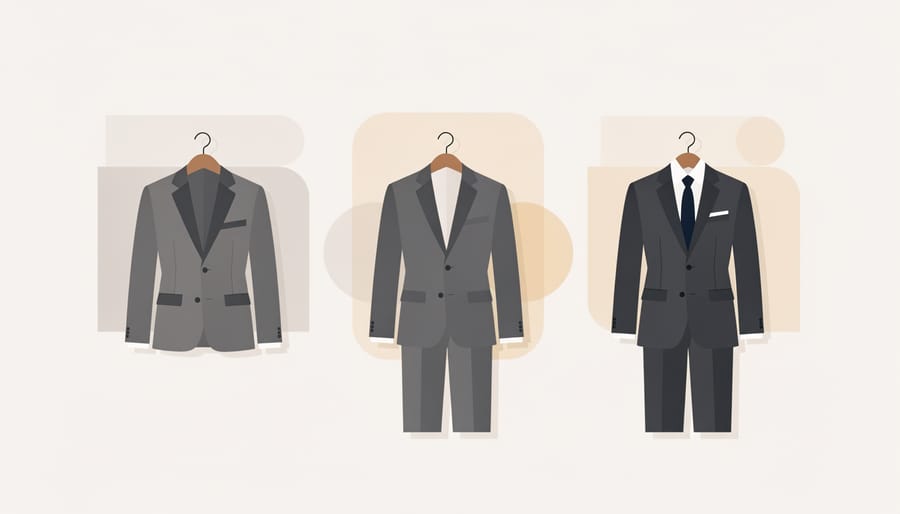
1. The Navy Blue Single-Breasted Suit
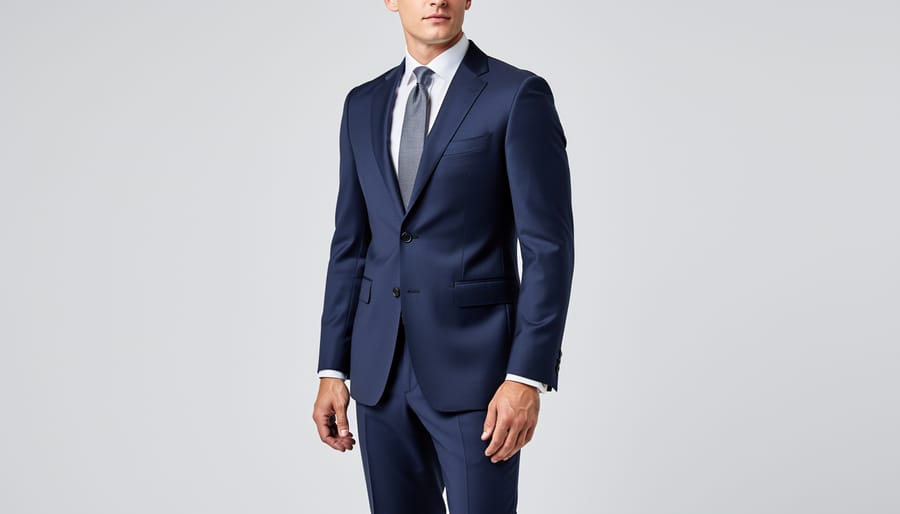
The navy blue single-breasted suit stands as the most essential piece in any man’s wardrobe, and for good reason. This suit works harder than any other, seamlessly transitioning from boardroom presentations to wedding receptions to dinner dates without missing a beat.
Navy’s universal appeal stems from its ability to convey authority without the severity of black or the potential blandness of gray. It complements virtually every skin tone and pairs effortlessly with the full spectrum of shirt colors. A crisp white shirt and burgundy tie creates a classic power look for important meetings. Swap in a light blue shirt and you soften the ensemble for client lunches. Ditch the tie entirely with a white dress shirt, and you’ve got a sharp business casual outfit that still commands respect.
The fabric weight you choose determines how many months of the year you’ll wear this suit. A mid-weight wool in the 10-12 ounce range offers year-round versatility in most climates. If you live somewhere with distinct seasons, consider a slightly heavier 13-14 ounce wool for fall and winter wear. Super 110s or 120s wool provides the sweet spot between durability and comfort for daily wear. Save the finer Super 150s fabrics for your second or third navy suit.
For fit, stick with a notch lapel and two-button closure. These details have remained consistent for decades because they create balanced proportions on most body types. A single vent or double vents both work, though side vents offer slightly more modern movement.
If you’re investing in just one quality suit, make it this one. A well-constructed navy single-breasted suit serves you for years across countless occasions, making it the foundation every timeless wardrobe requires.
2. The Charcoal Gray Two-Piece Suit

Charcoal gray occupies that sweet spot between navy’s approachability and black’s formality, making it the power suit of choice for men who need to command attention in professional settings. This is the suit that photographs beautifully in both natural and artificial light, avoiding the harsh contrast of black or the occasional flatness of navy on camera. If your career involves client presentations, speaking engagements, or any situation where you need to project authority without appearing overly aggressive, charcoal gray delivers.
The beauty of this suit lies in its transitional capability. Wear it with a white shirt and conservative tie for morning board meetings, swap in a light blue shirt for afternoon client dinners, or pair it with a black turtleneck for evening events that demand sophistication without black-tie formality. The James Bond suit frequently appears in this shade precisely because it conveys intelligence and control across contexts.
Choosing the right charcoal matters for your complexion. Men with cooler skin tones (pink or blue undertones) should seek charcoal with subtle blue notes, while those with warmer complexions (yellow or golden undertones) look better in charcoal with brown or taupe undertones. Hold fabric samples near your face in natural light, the right shade will make your skin look clear and healthy rather than washed out or sallow.
Invest in a medium-weight wool (around 10-11 oz) for year-round wear, and ensure the gray is deep enough to maintain its formality. Too light, and it loses authority; too dark, and it becomes indistinguishable from navy in most lighting.
3. The Classic Black Suit
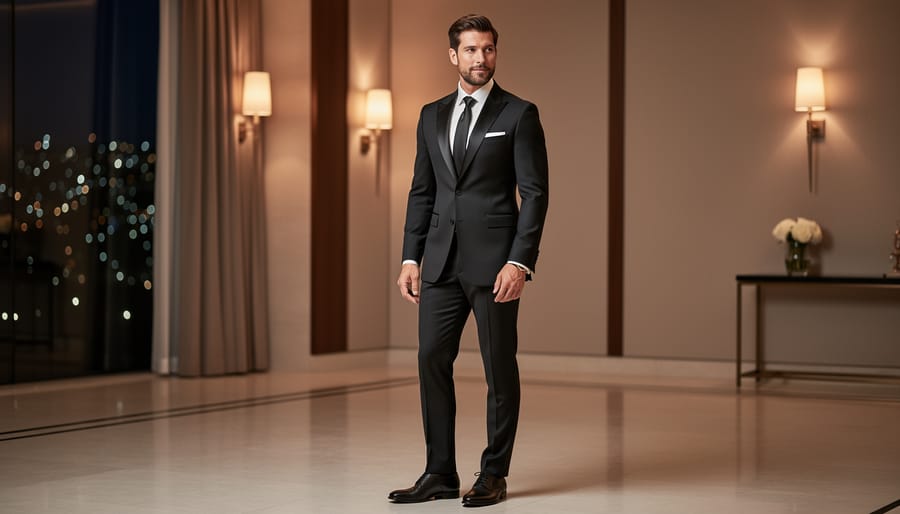
The black suit occupies a peculiar position in modern menswear. While often dismissed as too severe for business settings, it remains the definitive choice for formal evening events, black-tie-optional occasions, sophisticated weddings, and upscale celebrations. The key lies in understanding its proper context rather than avoiding it entirely.
A quality black suit excels when formality reaches its peak. Think evening galas, formal dinners, certain religious ceremonies, and elegant weddings where tradition takes precedence. Paired with a crisp white dress shirt and classic silk tie, the black suit communicates refined sophistication without the stuffiness of traditional tuxedo wear. It photographs beautifully, creates a slimming silhouette, and conveys authority in settings where gravitas matters.
The styling approach determines whether your black suit looks sharp or funereal. Skip the black shirt and black tie combination entirely unless you’re auditioning for a mob film. Instead, contrast is your friend: white, light blue, or subtle patterns in your shirting keep the look elegant rather than grim. Silver, burgundy, or midnight blue ties add dimension without clashing.
Fabric weight matters significantly with black suits. Lighter-weight wool (around 9-10 oz) prevents the suit from absorbing excessive heat and looking heavy in warmer months, while midweight options (11-13 oz) provide structure for cooler evening events. Year-round Super 120s wool strikes an excellent balance, maintaining shape while remaining breathable enough for extended wear across different settings and seasons.
4. The Light Gray or Mid-Gray Suit

A light to mid-gray suit fills a crucial gap in your wardrobe that darker suits can’t quite match. Where navy and charcoal command authority through weight and seriousness, lighter gray projects approachability while maintaining complete professionalism. It’s the suit that makes you look competent without seeming intimidating.
This shade excels in daytime settings. Business lunches, afternoon meetings, outdoor weddings, spring and summer events, situations where a dark suit can feel heavy or overly formal. The lighter tone reflects rather than absorbs light, which keeps you looking fresh even in warm weather and prevents that oppressive, weighted-down appearance that navy or charcoal can create under bright conditions.
The versatility extends to styling. Light gray pairs beautifully with navy accessories, creating classic contrast combinations. It works with burgundy, forest green, and brown leather, color families that can clash with darker suit bases. You can dress it down more successfully than darker suits too, wearing it with an open collar or pairing the jacket separately with chinos.
For fabric, choose based on your climate and wearing frequency. Year-round tropical wool (around 250 grams) works in most environments. In consistently warm climates, consider lighter weights like fresco or high-twist wool that breathe better. Avoid heavy winter fabrics in light gray, the color already reads warm-weather, and thick cloth creates a confusing visual message.
Light gray is often a man’s third or fourth suit purchase, but if you live in a warm climate or your work environment skews business casual, consider making it your second.
5. The Navy Pinstripe Suit

A navy pinstripe suit introduces pattern into your wardrobe without sacrificing versatility. The thin, vertical stripes add visual interest while maintaining the professional authority of solid navy, making this an ideal third or fourth suit acquisition once you’ve established your solid foundations.
Pinstripes carry historical weight in menswear. Originating in British banking and finance, they’ve long communicated authority and attention to detail. The vertical lines create a subtle elongating effect, making them particularly flattering for most body types. Unlike bolder patterns that can date quickly, pinstripes have remained consistently acceptable in professional settings for over a century.
Understanding stripe variations matters when selecting your suit. True pinstripes feature thin, closely spaced lines, typically in white or light gray against navy fabric. Chalk stripes are wider, bolder, and spaced further apart, creating a more assertive, fashion-forward look. For timeless versatility, choose traditional pinstripes over chalk stripes. The spacing should be narrow enough to read as textured navy from a distance rather than obviously striped.
Modern styling keeps pinstripes relevant in 2026. Pair with solid shirts and ties to let the suit pattern shine, avoiding competing patterns that create visual chaos. A white dress shirt remains the safest choice, but light blue works equally well for less formal settings. Keep accessories minimal and classic. The suit itself provides enough visual interest without bold pocket squares or patterned ties.
Fit remains crucial with patterned suits. Ensure stripes align properly at seams, particularly across the shoulders and down the jacket front. Misaligned stripes immediately signal poor construction or fit.
6. The Double-Breasted Navy or Gray Suit
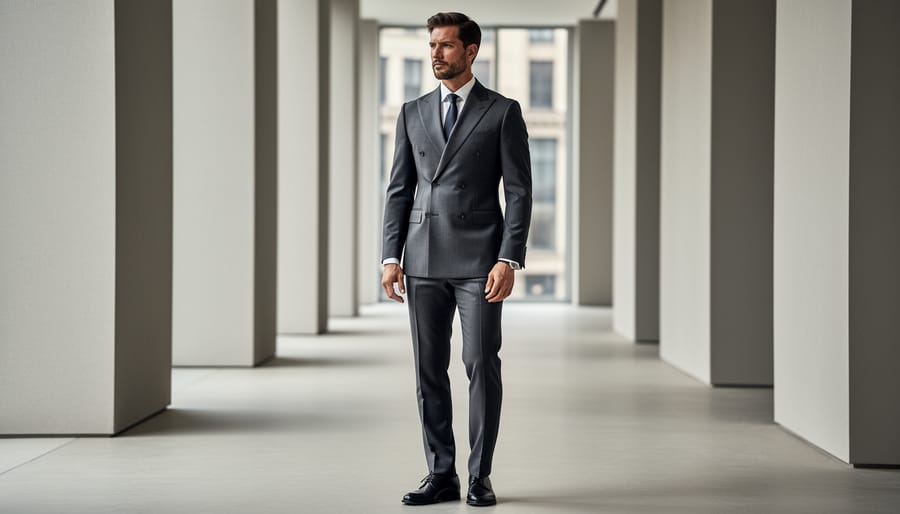
The double-breasted suit represents one of menswear’s most enduring power moves, and after decades of limited popularity, it has reasserted itself as a contemporary wardrobe essential rather than a costume piece. This style immediately distinguishes you in any room where single-breasted suits dominate, projecting confidence and sartorial knowledge without saying a word.
Contemporary double-breasted suits work best in navy or medium-to-charcoal gray, which ground the style’s inherent formality while maintaining versatility. The key to wearing this cut successfully in 2026 lies in modernized proportions. Look for a slightly shorter jacket length that hits mid-seat rather than covering your entire backside, narrower peak lapels around 3.5 to 4 inches wide, and a higher button stance that creates a leaner silhouette. These adjustments prevent the boxy, shoulder-padded look that defined 1980s excess.
Body type matters more with double-breasted construction than with single-breasted suits. The overlapping front panels add visual width, which taller men with athletic or slim builds can carry effortlessly. Shorter men or those with fuller midsections should proceed carefully, focusing on six-on-two button configurations rather than six-on-one styles, which create longer unbroken vertical lines. A skilled tailor can adjust the button placement to elongate your torso and refine the fit.
Fit requirements are non-negotiable: a double-breasted jacket must remain buttoned when standing, so the chest and waist need precise tailoring without pulling or gaping. The jacket should close smoothly across your midsection without strain. Reserve this style for occasions where you want to make an impression, business meetings requiring authority, formal daytime events, or upscale evening gatherings where traditional elegance still commands respect.
7. The Three-Piece Navy or Gray Suit
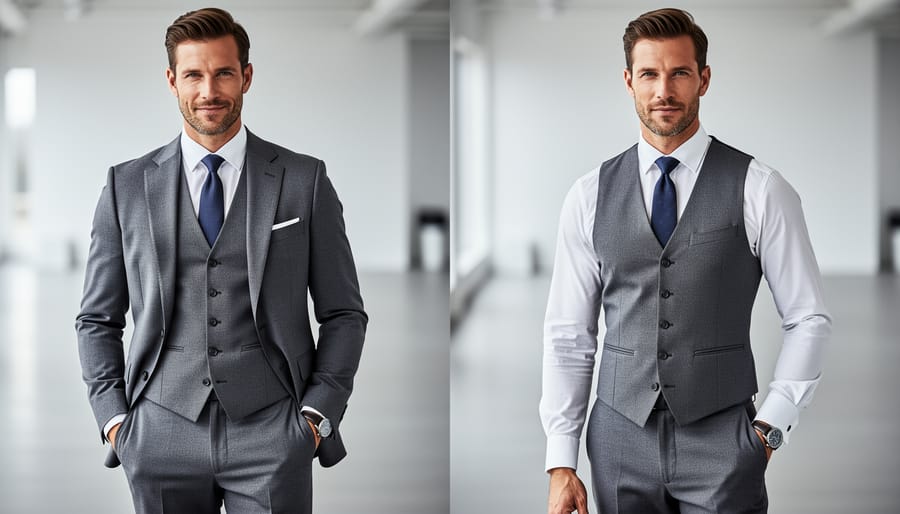
A three-piece suit represents the pinnacle of wardrobe flexibility. By adding a matching waistcoat to your navy or gray two-piece, you’re not buying one suit, you’re acquiring an entire system of formal options that adapt to everything from boardroom presentations to weekend dinners.
The waistcoat transforms the formality equation immediately. Wearing all three pieces together elevates even a standard navy suit to black-tie adjacent territory, making it appropriate for upscale weddings, formal dinners, and high-stakes business meetings where authority matters. The vest adds structure, creates a longer vertical line that flatters most body types, and communicates that you’ve put deliberate thought into your appearance.
Beyond formality, the three-piece delivers unmatched versatility. Consider what you actually own:
- The complete three-piece for maximum formality
- The suit jacket and trousers alone for standard business wear
- The waistcoat and trousers without the jacket for smart-casual settings
- The jacket worn separately with different trousers
- The vest layered under a sport coat for added warmth and texture
That single purchase creates five distinct outfit configurations, which is why a three-piece in navy or charcoal gray ranks among the 9 essential suits for building a complete wardrobe.
The vest also solves practical problems. It allows you to remove your jacket without looking undressed, since your shirt remains covered and your silhouette stays polished. This matters enormously at long dinners, outdoor summer events, or any situation where comfort and propriety need to coexist. You maintain formality while gaining breathing room.
Building Your Timeless Suit Wardrobe: What to Prioritize
Start with navy single-breasted, then add charcoal gray. These two suits solve 80% of formal situations you’ll encounter, from interviews and client meetings to weddings and dinners. If your work demands daily suit wear, whether you’re pursuing cool guy jobs in creative industries or navigating traditional corporate environments, prioritize a third suit in light gray before exploring patterns or statement styles.
For men who suit up weekly but not daily, stop at three: navy, charcoal, and either black (if you attend frequent formal events) or light gray (if you want daytime versatility). That’s a complete rotation without repetition fatigue.
Quality trumps quantity at every stage. One $1,200 suit that fits impeccably and uses proper canvas construction will serve you better than three $400 suits that sag after a season. Plan to build your collection over two to three years rather than rushing purchases.
Add pinstripes, double-breasted, or three-piece options only after your foundation is solid. These variations become powerful tools once you’ve mastered the basics, but they won’t replace the workhorses. When someone asks what to wear, you’ll never wonder, you’ll just reach for navy or charcoal and move on with your day.
Common Questions About Timeless Suits
How much should you spend on a timeless suit?
For a suit that will last years, budget at least $800-1200 for off-the-rack quality construction, or $1500-3000 for made-to-measure options. The investment pays off through better fabrics, proper canvassing, and construction that holds its shape through repeated wear and cleaning.
What fit details never go out of style?
A jacket that sits naturally on your shoulders without divots or pulling, sleeves that end at your wrist bone showing half an inch of shirt cuff, and trousers with a slight break at the shoe create a timeless silhouette. Avoid extremes in lapel width, trouser taper, or jacket length, as moderate proportions remain correct across decades.
When should trends influence your suit choices?
Trends can inform minor styling details like shirt collars, tie widths, or pocket square folds, but your core suit collection should ignore seasonal fashions entirely. The navy single-breasted and charcoal gray suits in your wardrobe will outlast dozens of trend cycles.
How do you update a classic suit for modern wear?
Keep the suit itself unchanged and refresh your approach through contemporary shirt choices, slimmer ties, modern dress shoes, or by wearing the jacket as a blazer with chinos. Learning to master suit styling with different accessories keeps classic pieces feeling current.
How many suits does a modern man really need?
Three suits cover most men’s needs: a navy single-breasted for versatility, a charcoal gray for authority, and either a black for formal events or a lighter gray for warm weather. Professionals attending daily meetings benefit from adding the navy pinstripe and a three-piece option for variety.