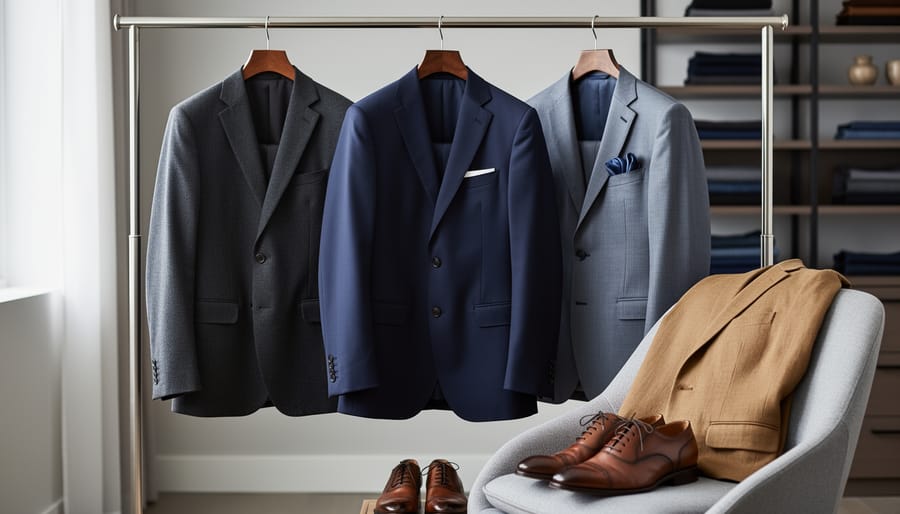
The 9 suits concept is a curated wardrobe framework that identifies the nine essential suit types every well-dressed man should own to cover all professional, formal, and social occasions. Rather than accumulating suits haphazardly or relying on a single navy option for everything, this systematic approach ensures you’re properly equipped for boardroom presentations, weddings, funerals, cocktail parties, and everything in between.
Why nine specifically? The number represents the sweet spot between minimalism and completeness. Three suits leave you underprepared for life’s varied dress codes. Fifteen creates overlap and decision fatigue. Nine covers the spectrum of formality, seasonality, and style variation without bloating your closet with pieces that rarely see daylight.
For men building their first serious wardrobe or refining what they already own, this framework removes the anxiety of standing in front of your closet wondering if you have the right suit for an occasion. You will. The system prioritizes foundational pieces first, then layers in specialized options as your needs and budget expand. Whether you’re 27 and investing in your first quality suit or 42 and realizing your collection has gaps, understanding which nine suits matter transforms shopping from overwhelming to strategic.
This guide breaks down each of the nine suit types, explains when and why you’d wear them, and shows how they work together as a complete system for 2026 and beyond.
What the 9-Suit Wardrobe Means
The 9-suit wardrobe is a structured approach to men’s formalwear that ensures you own the right suit for every situation life throws at you. Rather than accumulating random suits over the years, this system identifies nine specific styles that work together to cover the full spectrum of occasions, from client meetings and job interviews to weddings, funerals, creative events, and formal galas.
This concept has roots in mid-20th century menswear philosophy, when suits were daily uniform rather than special-occasion clothing. Style advisors recognized that men needed variety without redundancy, leading to frameworks that emphasized strategic selection over endless options. The 9-suit system represents the modern refinement of this thinking, calibrated for today’s dress codes and lifestyles.
- Suit Formality Hierarchy
- The spectrum from business formal (dark, solid suits) through smart casual (lighter colors, textures, separates) to black-tie formal (tuxedo). Understanding this hierarchy guides appropriate suit selection for each occasion.
- Wardrobe Foundation Pieces
- The core suits every man should own first, typically navy and charcoal gray, that handle 80% of formal occasions and serve as the building blocks for a complete collection.
- Seasonal Rotation
- The practice of wearing suits appropriate to climate and weather, with heavier flannels for winter and lightweight fabrics for summer, extending suit longevity and ensuring year-round comfort.
- Smart Casual Separates
- Blazers and trousers worn as non-matching combinations that bridge the gap between full suits and casual wear, offering versatility for modern dress codes.
What makes nine the magic number? It’s about comprehensive coverage without wasteful overlap. Each suit occupies a distinct role, different fabric weights for seasons, varying formality levels for occasion types, and a mix of solids and patterns that prevents visual repetition. You’re not buying nine navy suits or nine tuxedos; you’re building a coordinated system where each piece handles situations the others cannot.
This framework also accounts for how men actually dress in 2026. You need fewer ultra-formal options than your grandfather did, but more versatility for creative workplaces, destination weddings, and the blurred lines between professional and social settings. The 9-suit wardrobe adapts classic principles to contemporary reality.
How the 9-Suit System Works
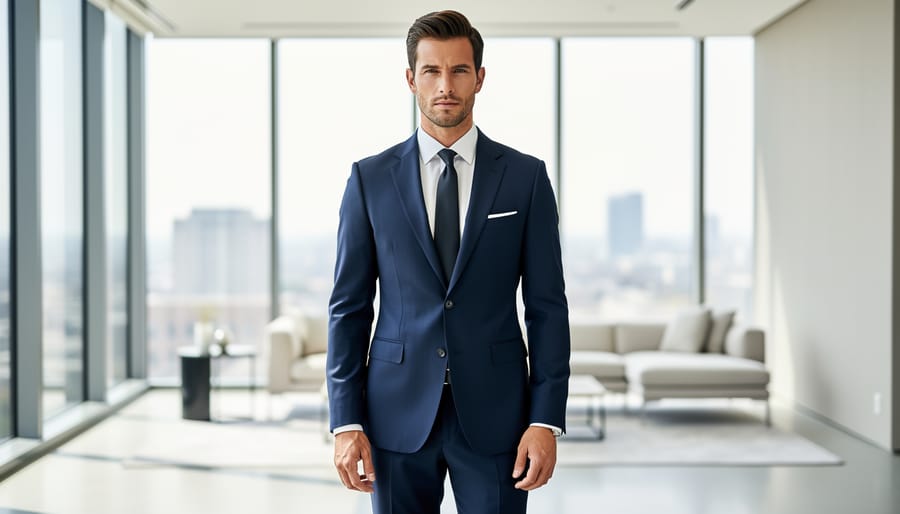
The 9-suit system isn’t about owning nine random jackets, it’s a strategic framework designed to ensure you’re prepared for every occasion life presents, from Monday morning presentations to Saturday evening weddings. The concept rests on a simple premise: most men cycle through a predictable range of events and settings, and nine carefully chosen suits provide complete coverage without redundancy or gaps.
At its core, this system maps suits across two essential axes: formality and seasonality. The formality spectrum runs from business-formal through smart-casual, ensuring you have appropriate options whether you’re addressing the board or meeting friends for dinner. Meanwhile, seasonal rotation accounts for fabric weight and color depth, so you’re never sweating through a heavy flannel in July or shivering in a lightweight cotton in January.
The strategic logic mirrors the principles behind James Bond tailoring being impeccably dressed for any situation without appearing to have tried too hard. The system achieves this through calculated variety: instead of owning three navy suits that essentially serve the same purpose, you own one navy worsted, one navy pinstripe, and one navy blazer with gray trousers. Each occupies a distinct role in your wardrobe.
Here’s how the selection principles work in practice:
- Formality range: Three suits for formal occasions, four for business-professional settings, and two for smart-casual versatility
- Color theory: Foundation in navy and gray, expanded with brown/tan and one statement option for personality
- Seasonal rotation: Heavy flannels for winter depth, lightweight fabrics for summer breathability, year-round workhorses in medium weights
- Occasion matching: Each suit answers a specific question: “What do I wear when…?” without overlap
The beauty of nine specifically lies in its completeness without excess. Eight leaves gaps, you’ll lack either a seasonal option or a creative expression piece. Ten introduces redundancy, with suits competing for the same occasions. Nine hits the sweet spot where you can dress appropriately for anything while maintaining a manageable, rotation-friendly wardrobe.
This isn’t about rigid rules, it’s about intelligent defaults. You’re building a foundation that covers professional obligations, social events, seasonal shifts, and personal style moments, all while ensuring each suit earns its closet space through distinct utility.
The 9 Essential Suit Types Every Man Should Own
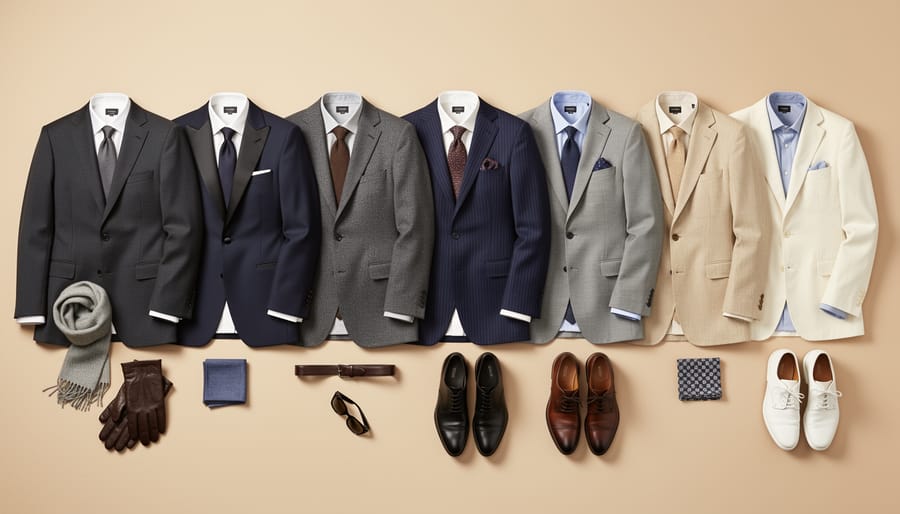
The Navy Worsted Suit
The navy worsted suit sits at the heart of any well-planned wardrobe. Its near-universal acceptance spans boardrooms, courtrooms, weddings and client dinners, few garments move as seamlessly across professional and formal settings. Navy carries authority without the severity of black, pairs effortlessly with white, light blue and patterned shirts, and accepts brown or black shoes equally well.
Worsted wool delivers the ideal foundation fabric. Its tight twist creates a smooth, resilient surface that resists wrinkles, drapes cleanly and maintains its shape through long days. Look for mid-weight worsted in the 10-12 ounce range for year-round wearability, or lighter 9-10 ounce tropical worsted for warmer climates. The fabric’s subtle sheen elevates formality just enough for evening events without appearing costume-like during daytime business.
This suit’s styling flexibility makes it indispensable. Wear it with a white dress shirt and repp-stripe tie for presentations, swap to a chambray shirt for client lunches, or dress it down with a turtleneck for creative meetings. Business professionals continue to cite the navy suit as go-to formal wear precisely because it adapts without compromise. If you own only one suit, make it navy worsted in a modern two-button, notch-lapel silhouette.
The Charcoal Gray Suit
A charcoal gray suit stands beside navy as the second essential pillar of any professional wardrobe. Where navy reads slightly more approachable, charcoal projects authority and formality, making it the go-to choice for serious business meetings, interviews, board presentations, and traditional corporate environments.
The darker tone carries more weight than mid-gray, positioning you as someone who means business. Charcoal works beautifully for evening events and formal occasions where black might feel too severe but you still need gravitas. It’s the suit that executives and men in a style career rely on when impression matters most.
Paired with a white shirt and conservative tie, charcoal delivers maximum professionalism. With a light blue shirt and no tie, it softens into smart business casual. The versatility lies in its neutrality, charcoal complements every shirt color, tie pattern, and shoe shade in your closet. Together with navy, these two suits form an unshakeable foundation that covers 80% of professional scenarios a modern man faces.
The Mid-Gray Flannel Suit
The mid-gray flannel suit introduces both visual and tactile depth to your wardrobe rotation when temperatures drop. Where worsted wools present smooth, business-forward surfaces, flannel’s soft nap creates dimensional texture that reads more approachable while maintaining formality.
This suit thrives in the transitional months and winter, when heavier fabrics feel appropriate rather than excessive. The brushed finish catches light differently than flat weaves, adding subtle interest without pattern. That textural quality makes mid-gray flannel equally comfortable in boardrooms and weekend brunches, dressed up with crisp white shirts for client meetings, or relaxed with rollneck sweaters for smart-casual occasions.
Flannel’s inherent softness pairs naturally with autumn and winter color palettes: burgundy ties, forest green pocket squares, and rich brown shoes all complement the fabric’s warmth. Unlike your navy and charcoal foundations built for year-round wear, this suit operates seasonally. When spring arrives, retire it until cooler weather returns.
The mid-tone gray occupies valuable middle ground between your darker foundational suits and lighter summer options, creating visual variety in your professional rotation without requiring bold pattern choices.
The Light Gray Summer Suit
A light gray summer suit solves the seasonal challenge of looking sharp when temperatures climb. This is your warm-weather workhorse, cut from lightweight fabrics like tropical wool, fresco, or cotton-linen blends that breathe far better than winter-weight cloth. The pale shade reflects heat rather than absorbing it, keeping you cooler while maintaining polish.
Choose fabrics in the 8-10 ounce range, anything heavier defeats the purpose. The lighter color telegraphs seasonal appropriateness at garden parties, outdoor weddings, and summer business events. Pair it with crisp white or pale blue shirts and skip the tie for smart-casual occasions. Oxford cloth button-downs work particularly well here.
This suit shines at daytime events from May through September. After Labor Day, retire it until spring returns. The relaxed tone makes it less suitable for formal evening events or conservative boardrooms, but perfect for everything else the warmer months throw at you.
The Navy Pinstripe Suit
The navy pinstripe suit introduces visual interest and authority to your rotation without sacrificing versatility. Those vertical chalk stripes, typically spaced between half an inch and one inch apart, create a lengthening effect while projecting the traditional power-dressing aesthetic associated with finance, law, and executive leadership.
This suit works best in worsted wool with a subtle stripe contrast. Too bold, and it becomes costume-like; too faint, and you lose the pattern’s impact. The sweet spot is a stripe clearly visible at conversation distance but refined enough for conservative environments.
Deploy this suit strategically: client presentations where you need to command attention, formal business meetings, or situations requiring traditional corporate credibility. It reads more serious than solid navy but less formal than charcoal, perfect for moments when you want your wardrobe working in your favor before you’ve said a word.
The Brown or Tan Suit
Brown and tan suits break you free from the blue-gray monotony that dominates most men’s wardrobes. A mid-brown suit in wool or linen delivers unexpected versatility, it pairs naturally with cream, white, and chambray shirts while accepting textures like knit ties and woven belts that would look forced with navy.
Tan suits work best from late spring through early fall, particularly in cotton or lightweight wool. They telegraph approachability rather than corporate authority, making them ideal for creative industries, outdoor events, and business-casual Fridays. Brown suits in heavier fabrics suit autumn perfectly, coordinating with the season’s color palette.
These earthy tones require slightly more awareness, they look best on men with warm or neutral skin undertones and can appear muddy in harsh fluorescent lighting. Choose chocolate brown for conservative settings, tobacco brown for versatility, and lighter tans when the temperature climbs. Skip brown suits for traditional corporate interviews or black-tie adjacent events.
The Navy Blazer with Gray Trousers
This separates combination might be your hardest-working investment. A navy blazer paired with gray trousers delivers the polish of a suit with far more versatility, you can wear them together for smart-casual events or split them across your casual wardrobe ideas with jeans, chinos, or different odd trousers. The blazer should be structured but not overly formal, think patch pockets or mother-of-pearl buttons rather than strict business styling. Mid-gray flannel or worsted trousers provide the best neutral foundation. This pairing works for creative office environments, Friday meetings, gallery openings, and weekend dinners where you want to look sharp without the full suit formality. The mix-and-match potential effectively gives you multiple outfits from two pieces, making this ninth “suit” the most flexible addition to your wardrobe.
The Tuxedo
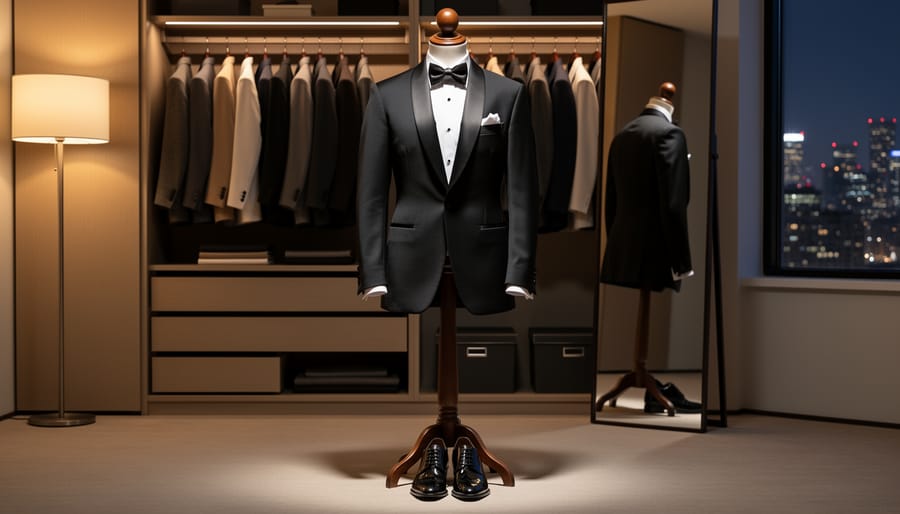
A tuxedo stands apart from your other suits because it serves one specific, non-negotiable purpose: formal evening events. When an invitation states “black tie,” you need a proper tuxedo, not a dark suit with a bow tie.
The classic tuxedo features a single-breasted jacket with peaked or shawl lapels faced in satin or grosgrain, matching trousers with a satin side stripe, and a white dress shirt with French cuffs. The fabric is typically black wool or mohair blend, chosen for its deep color and subtle sheen under evening lighting.
Unlike your other eight suits, a tuxedo doesn’t adapt to multiple contexts. It performs one role exceptionally well: weddings, galas, award ceremonies, and formal fundraisers. This specificity makes it essential rather than optional. Attempting to substitute a navy suit at a black-tie event signals either ignorance of dress codes or disregard for the host’s expectations.
Quality matters here because you’ll own this piece for decades. A well-constructed tuxedo, properly maintained, outlasts trends and justifies its higher investment through countless elegant evenings where you’re dressed exactly right.
The Statement Suit
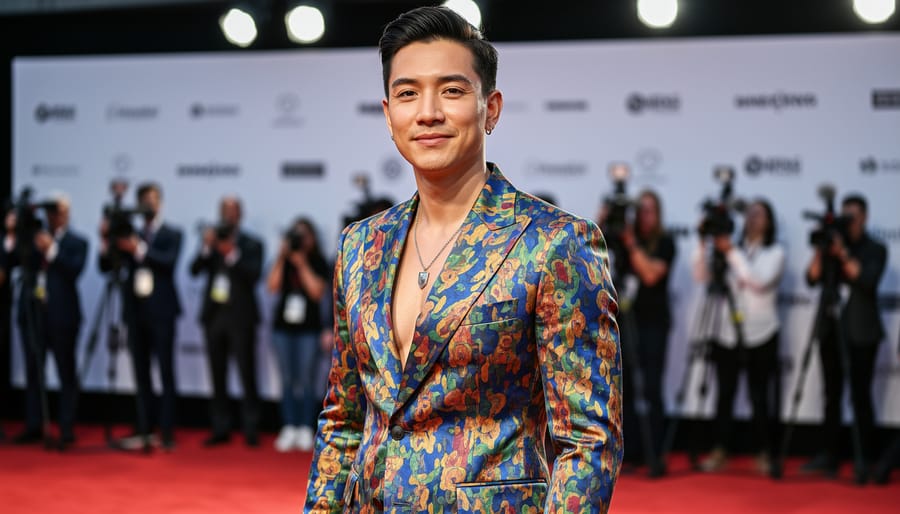
The statement suit is where strategic wardrobe building meets personal style. This is your confidence piece, the suit you wear when you want to be remembered. It might be a bold burgundy or forest green, a distinctive check or windowpane pattern, or an unexpected texture like corduroy or linen-cotton blend. The key is choosing something that reflects your personality while remaining tasteful enough to wear repeatedly.
This suit works hardest at creative industry events, cocktail parties, dinner dates, and social occasions where standing out is an asset rather than a liability. A well-chosen statement suit demonstrates style awareness without screaming for attention. It shows you understand the rules well enough to bend them thoughtfully.
When selecting your statement suit, consider what makes you feel most confident. Some men gravitate toward rich jewel tones, others toward textured fabrics or subtle patterns. The best choice is one that feels distinctly you, something you reach for when you want to make an impression that lasts beyond the evening.
Where and When to Wear Each Suit
Knowing which suit to reach for transforms morning anxiety into confident decision-making. The navy worsted suit handles job interviews, client presentations, and daytime weddings with equal authority, it’s your default professional choice when the dress code says “business” without further specification. Pair it with a white shirt for maximum formality, or introduce a light blue Oxford for approachability in creative meetings.
The charcoal gray suit occupies similar terrain but skews slightly more formal. Reserve it for high-stakes presentations, evening events, and occasions when you need gravitas. Funerals, formal award ceremonies, and black-tie optional events where you’re choosing a dark suit over a tuxedo all call for charcoal. It communicates seriousness without the softness that navy sometimes projects.
Your mid-gray flannel belongs to October through March, shining at fall weddings, holiday parties, and cooler-weather business travel. The texture reads as intentional rather than default professional, making it excellent for smart-casual Friday meetings or dinner dates where you want polish without stiffness. The light gray summer suit reverses this calendar, becoming your warm-weather workhorse for outdoor weddings, summer conferences, and garden parties where darker suits would look heavy.
The navy pinstripe adds authority to negotiations, executive meetings, and situations where you’re establishing credibility with new clients or senior leadership. It’s more formal than solid navy but less severe than charcoal, occupying a sweet spot for professionals who need to project expertise. Avoid it for creative industries unless you’re intentionally playing with the “sharp businessman” aesthetic.
Brown and tan suits thrive outside traditional corporate environments, creative agencies, media industry events, weekend weddings, and date nights where formal dress codes meet personality. These earthy tones pair brilliantly with texture-rich accessories and even experimental sneaker pairing for truly casual-smart occasions. The separates combination of navy blazer with gray trousers handles networking events, cocktail parties, speaking engagements, and any situation marked “business casual” or “smart casual”, essentially filling the gap between suit-required and jeans-acceptable.
Your tuxedo waits for black-tie galas, formal weddings, opera openings, and charity balls. The statement suit is your wildcard: patterned for creative conferences, colored for celebratory events, textured for dates and social gatherings where you want memorable impact. Apply styling design principles here, this is where personal expression meets the structure the other eight suits provide.
Building Your 9-Suit Wardrobe Strategically
Building a complete 9-suit collection takes patience, planning, and a realistic budget. Most men should expect two to five years to assemble this wardrobe thoughtfully, prioritizing quality over speed.
Start with the trinity: navy worsted, charcoal gray, and mid-gray flannel. These three cover 80% of professional and formal occasions you’ll encounter. Your first purchase should be the navy worsted, it’s the most versatile piece you’ll own. Follow with charcoal for formal events, then add the mid-gray flannel within your first year.
Budget strategically across tiers. Invest heavily in your navy and charcoal suits ($800-1,500 each for quality construction that lasts a decade). The next tier, light gray summer, navy pinstripe, and brown suits, can justify $500-900 each, as they see less frequent wear. Your statement suit offers flexibility for experimentation at $400-700.
The tuxedo deserves special consideration. If you attend black-tie events twice yearly or less, quality rental makes financial sense. Once you’re wearing it three or more times annually, purchase becomes cost-effective at $600-1,200.
Your navy blazer and gray trousers separates offer excellent early value, they function like a suit while doubling as versatile standalone pieces. Many men acquire these second or third, right after their foundational navy suit.
When you build a wardrobe this way, focus on proper fit above all else. A $600 suit tailored perfectly outperforms a $1,500 suit worn off-the-rack. Budget $75-150 per suit for alterations, sleeve length, trouser hem, waist suppression, and shoulder adjustments transform acceptable into exceptional.
Purchase during strategic windows: end-of-season sales (July and January) offer 30-50% savings on quality suits without compromising construction or fabric.
Common Questions About the 9-Suit Wardrobe
Men considering the 9-suit approach often have practical concerns that affect whether they’ll commit to building this wardrobe. These questions address the realities of suit ownership, from financial planning to closet logistics, and help you adapt the system to your specific circumstances.
Do I really need to buy all nine suits at once?
No. Most men should start with the navy worsted and charcoal gray suits, then add pieces as budget allows and occasions demand. Building this wardrobe over two to three years makes financial sense and lets you refine your preferences.
How much should I budget for a complete 9-suit wardrobe?
Expect to invest anywhere from $3,000 to $15,000 depending on whether you choose off-the-rack, made-to-measure, or bespoke options. Quality suits in the $400-$800 range offer excellent value for most professional men.
What if I work from home or rarely need suits?
Scale the system to your lifestyle. You might focus on four versatile suits (navy, charcoal, light gray, and a blazer combination) rather than the full nine, ensuring you’re covered for interviews, weddings, and important meetings without overinvesting in rarely-worn pieces.
How do I maintain and store nine suits properly?
Use quality wooden hangers with shaped shoulders, allow suits to rest 24-48 hours between wears, and invest in garment bags for seasonal storage. Regular brushing and occasional professional cleaning (not after every wear) will extend their lifespan significantly.
Climate plays a significant role in how you execute this wardrobe. Men in warm regions might skip the flannel suit entirely and double up on lightweight options, while those in northern cities will get more use from heavier fabrics. The principle remains sound, you’re building comprehensive coverage, but the specific fabrics and weights should reflect your environment.
Fit matters more than brand names. A well-fitted suit from a mid-range retailer will always look better than an ill-fitting luxury piece. Find a skilled tailor and budget for alterations on every suit you buy, even expensive ones.
The 9-suit wardrobe isn’t about excess or collecting clothes you’ll rarely wear. It’s about strategic preparation that transforms how you show up in the world. When you know you have the right suit for any situation, from a last-minute formal event to a creative pitch meeting, you carry a different kind of confidence. You’re not scrambling or compromising. You’re ready.
In 2026, as professional boundaries blur and dress codes evolve, this framework matters more, not less. The men who understand versatility, who can shift from boardroom authority to smart-casual sophistication, hold a distinct advantage. The 9-suit system gives you that range without guesswork.
You don’t need to build this wardrobe overnight. Start with the navy and charcoal foundations. Add seasonal depth when you’re ready. Let the blazer-trousers combination carry you through transitional moments. Save for the tuxedo when a black-tie invitation arrives. Choose your statement piece when you’re clear on where you want to make an impression.
The suits you own shape the opportunities you can confidently pursue. They open doors, literal and figurative. They let you say yes without hesitation.
Build this wardrobe thoughtfully, fit each piece properly, and maintain them with care. The investment pays dividends every time you dress with intention and walk into a room knowing you belong there, whatever the occasion demands.